
Introduction
Acetone works. It cuts grease, softens resins, and dries fast. But it is also a Class IB flammable liquid, it evaporates quickly, and it raises waste-handling and exposure concerns that push many facilities and consumers to look elsewhere.
There is no single best substitute. The right choice depends on the soil, the substrate, how fast the part must dry, your safety goals, and your environmental requirements.
This guide covers direct solvent substitutes, bio-based and aqueous cleaners, non-solvent methods, household questions, and a practical industrial testing process.
Key Takeaways
- Choose a substitute by application and full hazard profile, not by an "acetone-free" label.
- Isopropyl alcohol, acetates, bio-based solvents, aqueous cleaners, hot water, and steam each carry different trade-offs.
- Test any candidate on the actual soil and substrate before changing production.
- Changing the cleaning method can cut solvent dependence more than swapping solvents.
What Is Acetone and Why Consider a Substitute?
Acetone (CAS 67-64-1) is a fast-evaporating ketone used in degreasing, resin and adhesive removal, coatings, tool cleaning, and nail products. OSHA's chemical page lists its NFPA 704 ratings as health 1, fire 3, reactivity 0.
Speed and solvency are its strengths. The drawbacks are what drive substitution:
- Flammability: NIOSH lists a 0°F flash point.
- Exposure: The OSHA PEL is 1,000 ppm (8-hour TWA), while NIOSH recommends 250 ppm. Acetone irritates eyes and can dry or crack skin.
- Evaporation loss: Product disappears quickly, which raises consumption.
- Waste: Spent acetone used as a solvent can fall under EPA waste code F003, and ignitable waste can fall under D001. Your actual waste must be evaluated.
Acetone is excluded from the federal VOC definition, and the pure-product SDS lists no Clean Air Act HAPs. That does not remove the fire and exposure issues.
"Acetone-Free" Is Not the Same as Safer
The FTC's Green Guides warn that a free-of claim can mislead if the replacement poses a similar environmental risk. Compare the whole formulation:
- Flash point and flammability
- VOC and HAP status
- Toxicity and exposure controls
- Disposal route
- Biodegradability evidence
- Material compatibility
Common Acetone Alternatives and Substitutes
Solvent-Based Alternatives
Isopropyl alcohol (IPA) handles some light oils and surface residues. It evaporates far more slowly than acetone and may not dissolve the same resins, coatings, or adhesives.
The acetate and ketone family offers closer solvency, but with similar hazards. NIOSH data shows:
| Solvent | Flash point | OSHA PEL | Evaporation (n-butyl acetate = 1) | Federal VOC |
|---|---|---|---|---|
| Acetone | 0°F | 1,000 ppm | 6.3 | Exempt |
| Isopropyl alcohol | 53°F | 400 ppm | 1.5 | Not exempt |
| Methyl acetate | 14°F | 200 ppm | 6.2 | Exempt |
| Ethyl acetate | 24°F | 400 ppm | 4.1 | Not exempt |
| MEK | 16°F | 200 ppm | 3.8 | Not exempt |

Methyl acetate dries almost as fast as acetone and is federally VOC-exempt, yet its flash point is low and its exposure limit is tighter. MEK has been removed from the HAP list, but that is separate from VOC treatment.
None of these solvents is universally safer. Flash points and evaporation rates also vary by grade and test method, so check your supplier's SDS.
Bio-Based and Lower-Impact Solvents
Ethyl lactate, dimethyl carbonate (DMC), and propylene carbonate may cut certain hazards or support sustainability goals. They can also dry slower, need longer dwell time, and behave differently on specific soils.
- Ethyl lactate: Sigma's SDS lists a 115°F closed-cup flash point and roughly 70% biodegradation in 28 days. Another supplier reports 133°F for its grade.
- DMC: 61°F flash point. It is federally VOC-exempt, but California's SCAQMD did not add it to its own exemptions over toxicity concerns.
- Propylene carbonate: 270°F flash point and 87.7% biodegradation in 29 days per its SDS.
Biodegradability data applies to the pure substance, not every finished cleaner built on it. Verify claims through the product's SDS, technical data sheet, and regulatory or independent documentation.
EPA's Safer Choice program reviews all ingredients in a formulation, and a listed ingredient alone does not earn a product claim.
Water-Based and Non-Solvent Approaches
When the goal is soil removal, not replacing one molecule with another, consider other routes:
- Aqueous surfactant or alkaline cleaners
- High-pressure hot water and steam
- Abrasion and filtration
- Process changes that reduce soil load
Feasibility depends on soil type, equipment, substrate, drying time, sanitation needs, and wastewater handling. Water-based does not mean drain-ready: EPA's pretreatment rules still prohibit discharges that create fire hazards, corrosion, or interference at the treatment plant.
How to Match an Acetone Substitute to the Application
Industrial Cleaning, Degreasing, and Washdown
For oils, grease, road film, and production residues, compare candidates on:
- Cleaning strength and dwell time
- Temperature and pressure
- Rinsability and drying needs
- Wastewater impact
- Worker exposure
For plant-wide washdown, equipment cleaning, and heavy-equipment maintenance, an aqueous or plant-based chemistry paired with hot water and mechanical action often fits better than another volatile solvent.
A real example: Central Metal Finishing needed to remove buffing compounds from aluminum, stainless steel, and brass. After its vapor degreaser failed in 2020, it ran an interim manual acetone bath, then moved to an alkaline aqueous cleaner.
TURI's case study describes cleaning as comparable to vapor degreasing, though it took more time. The case study does not include numeric efficiency or cost comparisons.
Resins, Coatings, Adhesives, and Composites
Removal depends on solvent polarity, Hansen solubility parameters, cure state, viscosity, dwell time, and the substrate. A solvent with a similar name or function will not necessarily perform the same way.
Test compatibility on plastics, elastomers, seals, painted surfaces, composites, and finished parts. Look for:
- Swelling or softening
- Discoloration or cracking
- Residue
- Loss of surface performance
Chemical-resistance charts help but are limited. Parker notes EPDM resists many alcohols, ketones, and esters, but that is class-level guidance, not approval for every compound.
Precision, Production, and Heat-Sensitive Cleaning
Balance these factors when you choose a substitute:
- Residue-free drying and evaporation rate
- Surface sensitivity and equipment design
- Ventilation needs and allowable downtime
Ignition control still applies. OSHA 1910.106 requires control of ignition sources, including static electricity, and substitution does not waive it.
Household and Nail-Care Uses
Regular polish dries on its own. Gel polish is cured under UV/LED light, and acrylics are a separate system. The American Academy of Dermatology identifies 100% acetone as the most effective at-home gel remover, while cautioning that it can irritate surrounding skin.
A non-acetone remover may be gentler for ordinary polish but can take longer or fail on gels and acrylics.
Basic safety rules still apply:
- Do not apply industrial solvents to skin or nails.
- Avoid mixing household chemicals.
- Ventilate and follow the product label.
- Wear skin and eye protection as directed.
How to Test and Implement an Acetone Replacement
Establish the Requirements
Document the current process first:
- Contaminant and substrate
- Cleaning method, contact time, and temperature
- Drying expectations and quality standard
- Solvent consumption and waste stream
- Worker complaints or exposure concerns
Screen Technical, Safety, and Compliance Data
Compare each candidate's SDS and TDS for:
- Flash point and vapor pressure
- VOC or HAP content
- Exposure guidance and PPE
- Storage and incompatibilities
- Disposal and biodegradability
Confirm US federal and state obligations before any trial.
Run Controlled Testing
Start with small tests on the actual soil, material, and equipment. ASTM G121 covers preparing contaminated coupons, and ASTM G122 covers evaluating cleaning agents and processes.

G122 notes that temperature, agitation, concentration, and geometry affect results, and calls for final evaluation on actual products.
Evaluate:
- Cleaning effectiveness and dwell time
- Residue and drying
- Corrosion, swelling, and appearance
- Rework and downstream performance
Run a Supervised Pilot
Compare the substitute against acetone under controlled conditions. Track:
- Usage and cycle time
- Quality, rework, and waste
- Downtime and ventilation needs
- Worker feedback
- Total cost per cleaned part
Update Procedures and Monitor
Revise SOPs, labels, storage, PPE, spill response, waste handling, and training before full rollout.
OSHA's HazCom standard requires training when a new chemical hazard is introduced. EPA requires accurate waste determination, and state rules may be stricter.
Phase the rollout and keep reviewing. One good trial does not justify a plant-wide switch.
Greystone's Approach to Reducing Dependence on Acetone
Greystone evaluates cleaning challenges at the facility level. It pairs Tri-Solve plant-based chemistries with HelioJET high-pressure hot-water and steam technology where they fit, instead of assuming every task needs a direct solvent swap.
That approach applies to:
- Plant-wide washdown through central systems piped to multiple drops
- Tanks, vessels, and mixers cleaned between batches
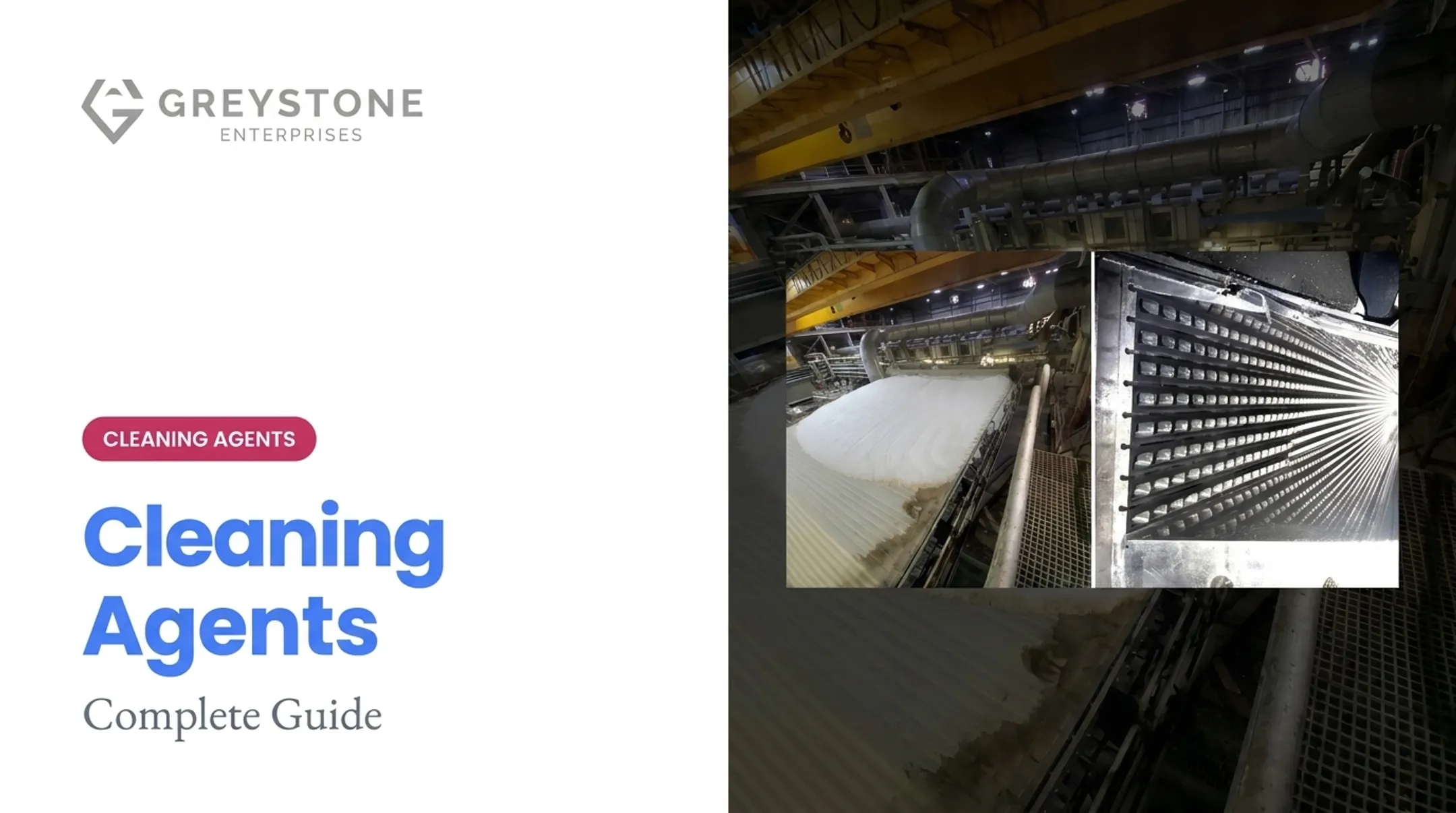
- Paper-mill equipment, including dryer fabrics
- Heavy-equipment and fleet wash bays
One paper-mill program cut the after-coater dryer-fabric cleaning cycle by 37% to 22 minutes and reduced chemical use by 75% versus the previous method.

The right solution still depends on soil, substrate, sanitation or production requirements, water availability, and facility constraints. Greystone does not present its chemistry or equipment as a universal drop-in acetone replacement, and product-specific documentation should guide any decision.
If your facility wants to reduce solvent reliance, contact Greystone for a customized cleaning assessment focused on safety, compliance, chemical and water reduction, downtime, and equipment reliability.
Frequently Asked Questions
What can I use instead of acetone?
Options include isopropyl alcohol, acetate solvents, bio-based solvents, aqueous cleaners, hot water, steam, and mechanical methods. The right one depends on the material, contaminant, safety requirements, and drying time.
Can I use rubbing alcohol as a substitute for acetone?
It may remove some light residues or nail products, but it is chemically different and may not dissolve the same resins, coatings, adhesives, or heavy soils. Check the label, SDS, and compatibility first.
Is acetone just isopropyl alcohol?
No. Acetone (67-64-1) and IPA (67-63-0) differ in solvency, evaporation, flammability (0°F versus 53°F flash point), and material compatibility. Neither is a universal replacement for the other.
What household items contain acetone?
Some nail-polish removers, paint or adhesive products, and specialty cleaners contain it, but formulations vary. Check the ingredient label and SDS, and never mix household products.
Is nail polish remover just acetone?
Not always. Some removers are mostly acetone, while others use non-acetone solvents, conditioners, fragrances, or water. Match the remover to ordinary polish, gel polish, or acrylics.
What is better, acetone or non-acetone?
Neither is universally better. Acetone may work faster on some products, while non-acetone formulas can be gentler for selected uses. Compare effectiveness, compatibility, exposure, ventilation, and product instructions.