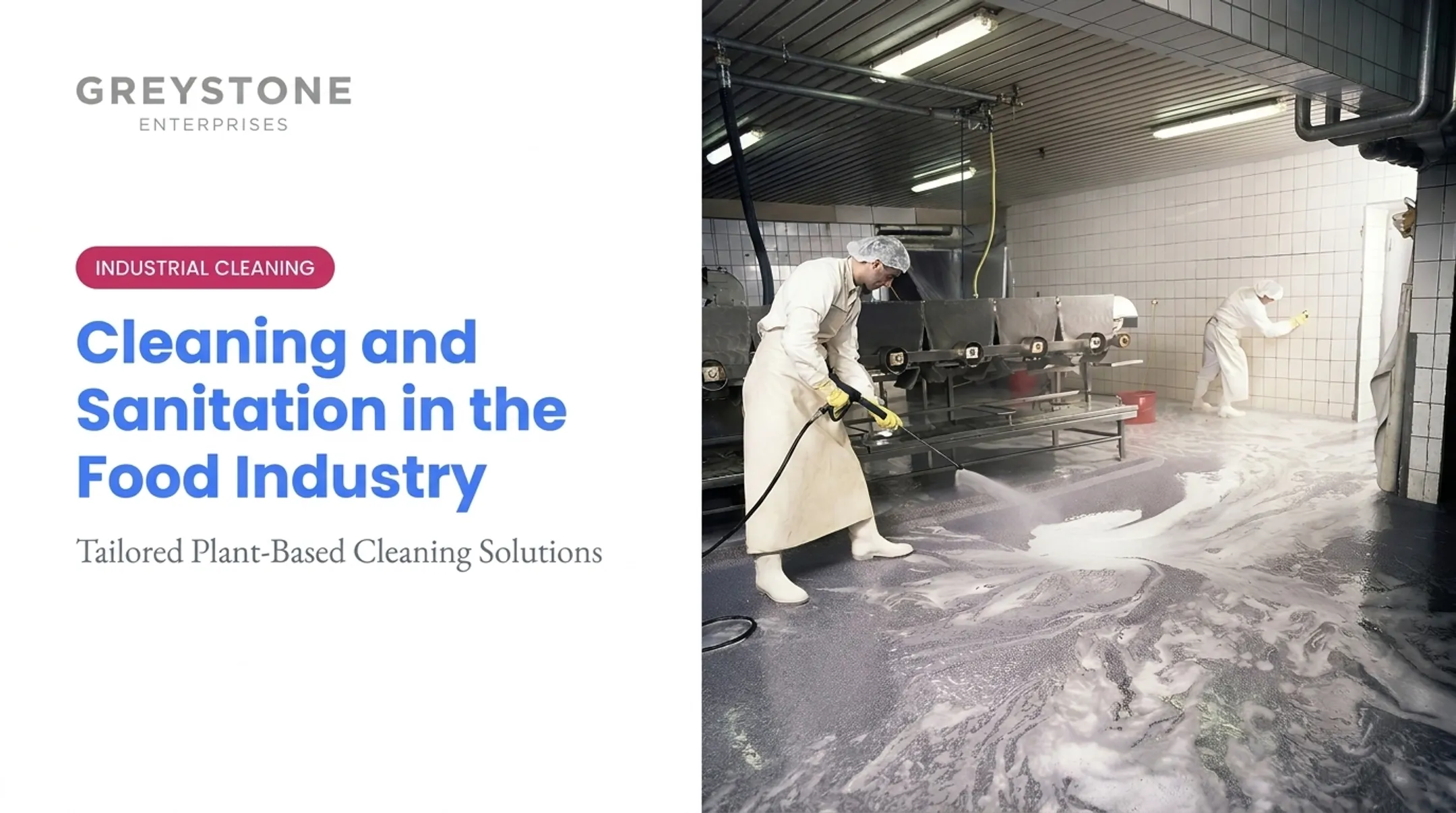

The stakes are real. CDC's 2025 burden estimates attribute 9.9 million domestic illnesses, 53,300 hospitalizations, and 931 deaths to major foodborne pathogens.
Sanitation is one of your main defenses. This guide covers product categories, how to choose among them, application methods, US compliance, and how to build a program that holds up on cost and sustainability.
Key Takeaways
- Match the product to the soil, surface, water, method, and required microbial control.
- Cleaning removes soil; sanitizing reduces microorganisms; disinfectants don't automatically suit food-contact surfaces.
- Label directions, contact time, rinsing, PPE, SDSs, and training are part of product selection.
- Judge products by total cost-in-use, not purchase price.
Common Food and Beverage Industry Cleaning Products
Detergents, alkaline cleaners, and degreasers
Alkaline cleaners generally dissolve food wastes such as fats, proteins, and carbohydrates, according to UC Davis guidance. No single chemistry handles every soil.
Degreasers are a good example. Greystone's Tri-Solve degreaser is a non-solvented, plant-based product aimed at light to moderate oil and grease. Heavier specialty greases may need a stronger alkaline product alongside it.
Acid cleaners and descalers
Acids dissolve mineral soils: milkstone, beverage deposits, hard-water scale. Used improperly, they can precipitate protein, so they often follow an alkaline step.
Check these before using any acid:
- Surface compatibility and corrosion risk (some products exclude yellow metals, for example)
- Dilution and ventilation
- Thorough rinsing, especially with gels, which leave residue more readily than foams or liquids
Sanitizers and disinfectants
The EPA separates the terms: cleaning removes dirt and organic matter, sanitizing reduces bacteria, and disinfecting kills viruses and bacteria. They aren't interchangeable.
The FDA Food Code describes a food-contact sanitizer as achieving a 5-log (99.999%) reduction on cleaned surfaces. Use only products labeled and registered for food-contact use, and follow the label's concentration and contact time.

CIP, COP, and specialized processing cleaners
Clean-in-place (CIP) circulates cleaning solutions through tanks and piping without disassembly. Clean-out-of-place (COP) soaks removed parts elsewhere. The right choice depends on your validated process.
Specialty options include:
- Low-foam CIP cleaners (no universal low-foam specification exists)
- Peroxide-based low-foam cleaners for complex soils
- Enzymatic formulations for biofilm, which show promise in laboratory studies but aren't a proven plant-wide fix
Application-support products
Supplies matter as much as chemistry. Foamers, dosing systems, test strips, brushes, and squeegees control dilution, coverage, and mechanical action. Color-coded tools also limit cross-contamination.
How to Choose Cleaning Products for Your Facility
Identify the soil before choosing the chemistry
| Soil | Typical starting point |
|---|---|
| Fats and oils | Alkaline cleaner or degreaser |
| Proteins, starches, sugars | Alkaline detergent |
| Mineral scale, milkstone | Acid cleaner or descaler |
| Biofilm | Cleaning with mechanical action; enzymatic products where suitable |
| Smoke or carbon deposits | Heavier alkaline, often with heat |
Mixed soils usually need a sequence, such as alkaline then acid, with rinses between.
Confirm surface and equipment compatibility
Stainless steel, aluminum, plastics, elastomers, and seals react differently to acids, alkalis, oxidizers, and heat. The Nickel Institute notes that stainless grade selection must account for the cleaning regime. Don't assume stainless guidance applies to aluminum.
Elastomer compatibility depends on the compound, chemical, and temperature. Ask the equipment manufacturer and the product's technical data sheet.
Account for water and operating conditions
Water hardness shapes results. USGS classifies water above 180 mg/L as CaCO3 as very hard, and hard water can demand more detergent and promote scale.
Performance also hangs on the "Sinner's circle": time, temperature, mechanical action, and chemical concentration. Change one and the others must adjust. Follow label and validated settings rather than generic numbers.
Match the product to the method
- Manual: moderate-foam products, with brushes for mechanical action
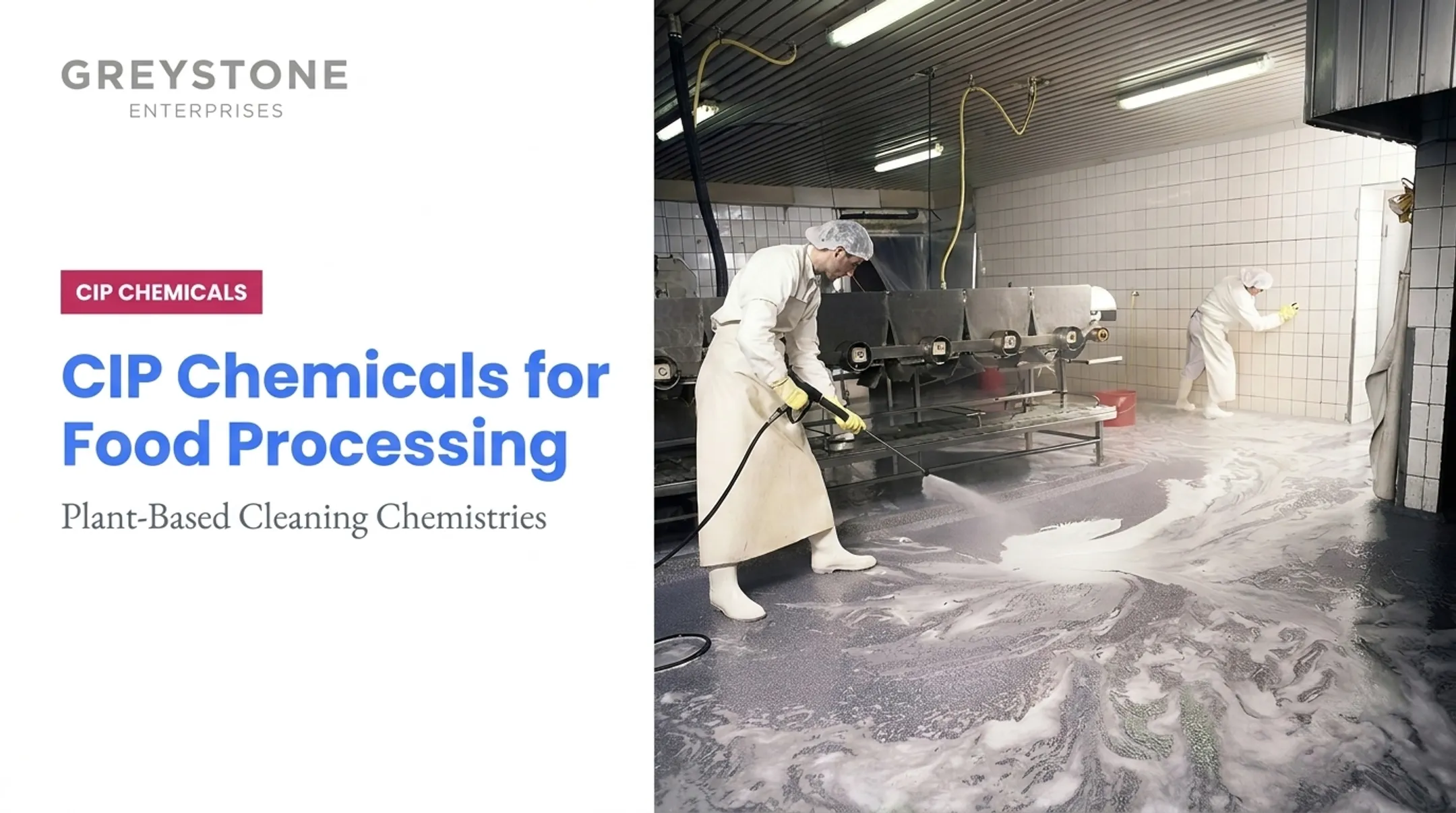
- Foam and washdown: foaming chemistry with hot-water rinse
- CIP: controlled dosing and low-foam chemistry
- Tanks and vessels: interior spray devices with matched chemistry
Verify food-contact and regulatory suitability
Suitability depends on the registered label use, concentration, contact time, and rinse instructions. Check the FDA Food Code, EPA labels, FSMA, and USDA requirements that apply to your operation.
Compare performance by cost-in-use
Look past price per gallon. Compare cost-in-use across:
- Dilution rate and chemical consumption
- Water and energy use
- Labor and downtime
- Equipment wear and disposal
- Supplier training and support
Published savings figures for dosing or concentrates are often thin, so validate results in your own plant.
Cleaning Methods and Product Application
Build a consistent sanitation sequence
A practical sequence:
- Remove gross soil
- Pre-rinse when appropriate
- Apply cleaner and allow the label contact time
- Add mechanical action
- Rinse
- Inspect
- Sanitize if required
- Document completion

Your SSOPs, product labels, and validated process set the exact steps.
Compare manual cleaning, CIP, and COP
Each method fits different equipment and labor constraints:
- Manual cleaning needs more labor and risks missed areas
- COP requires disassembly but allows close inspection of parts
- CIP reduces handling of internal piping and tanks, though 3-A guidance cautions that not all equipment suits full CIP and that cleaning must be validated
Use application equipment that supports consistency
Hot foamers, central washdown systems, steam, and tank-washing machines all improve repeatability when matched to the surface. For example, one conveyor-cleaning setup delivers up to 350 PSI and 180°F. Too much pressure or heat can damage seals and finishes, so match settings to the equipment.
Greystone's integrated approach
Greystone pairs HelioJET high-pressure hot-water and steam systems with Tri-Solve plant-based chemistries. Options include central cleaning systems piped to multiple drops for plant-wide washdown, and interior tank-washing systems for tanks, vessels, and mixers.
An assessment of your soils, equipment, and process shapes the recommended configuration for your plant.
Verify and document performance
Use several layers:
- Visual inspection
- Chemical concentration checks
- ATP testing for rapid checks (one food-surface study found a strong correlation with plate counts)
- Environmental monitoring where your hazard analysis requires it
- Records, corrective actions, and trend reviews
ATP does not replace microbiological testing. Cleaner and sanitizer residues can also interfere with ATP results, so validate the method with your chemistry.
Food Safety, Worker Safety, and US Compliance
Apply current US requirements
- FDA Food Code: a model code for retail and foodservice; the 2022 edition covers warewashing sanitizer parameters
- FSMA preventive controls (21 CFR 117): sanitation controls for food-contact surfaces and allergen cross-contact at covered facilities
- 9 CFR 416: written sanitation SOPs for official meat, poultry, and egg establishments
- EPA labels: the registered label governs sanitizer use
- OSHA Hazard Communication: labels, SDSs, and employee training
Store, label, and handle products safely
- Keep original labels; label secondary containers
- Keep SDSs accessible
- Assess hazards and supply the right PPE
- Segregate and lock chemical storage
- Never mix incompatible products. The CDC reports chlorine gas release when bleach meets acids.
Prevent cross-contamination and residues
- Use zoning with color-coded and dedicated tools
- Rinse correctly and protect exposed food and packaging
- Run pre-operational inspections and keep records
- Never use a product outside its label, even if it is marked "food safe"
Building a Sustainable, Cost-Effective Cleaning Program
Reduce waste through controlled dosing and process design
You can reduce overuse with:
- Concentrates and accurate dispensing
- Targeted application
- Right-sized equipment
Published benchmarks are often dated or sector-specific. One dairy source cites upwards of 4,800 gallons of wastewater per ton of product, much of it from cleaning. Treat that figure as context, not a target, and baseline your own plant first.

Evaluate sustainability claims carefully
Labels such as "plant-based," "biodegradable," or "green" don't prove food-contact suitability, efficacy, or worker safety. EPA Safer Choice and USDA BioPreferred verify ingredients or biobased content, not food-contact approval.
Ask suppliers for technical documentation, ingredient information, and wastewater and disposal guidance.
Measure results and improve
Track:
- Cleaning downtime and labor hours
- Chemical, water, and energy use
- Audit findings and re-clean rates
- Equipment condition
- Sanitation verification results
Greystone builds programs around long-term optimization and measurable sustainability milestones that save water, reduce energy, and improve efficiency. Set those milestones from your own baseline data.
Frequently Asked Questions
What are some common cleaning products used in the food service industry?
Common products include detergents, degreasers, acid descalers, food-contact sanitizers, surface and floor cleaners, and supporting tools. The right choice depends on the surface, soil, and labeled use.
What cleaning products are food safe?
Suitability depends on the label's intended food-contact use, concentration, contact time, and rinse requirements under US rules. Plant-based doesn't automatically mean food safe.
What chemicals are commonly used for cleaning in the food industry?
Alkaline cleaners, acids, detergents, chlorine and quaternary ammonium sanitizers, and peracetic acid or hydrogen peroxide systems. Verify each against current labels and your procedures.
How do I choose cleaning products for a food and beverage facility?
Match the product to your soil, surface materials, water quality, and cleaning method. Confirm rinseability, compliance documents, worker safety, sustainability goals, and total cost-in-use before you buy.
What is the difference between cleaning, sanitizing, and disinfecting?
Cleaning removes soil, sanitizing reduces microorganisms to an acceptable level, and disinfecting is a separate claim category. Disinfectants may not be appropriate on food-contact surfaces without the right label and procedure.