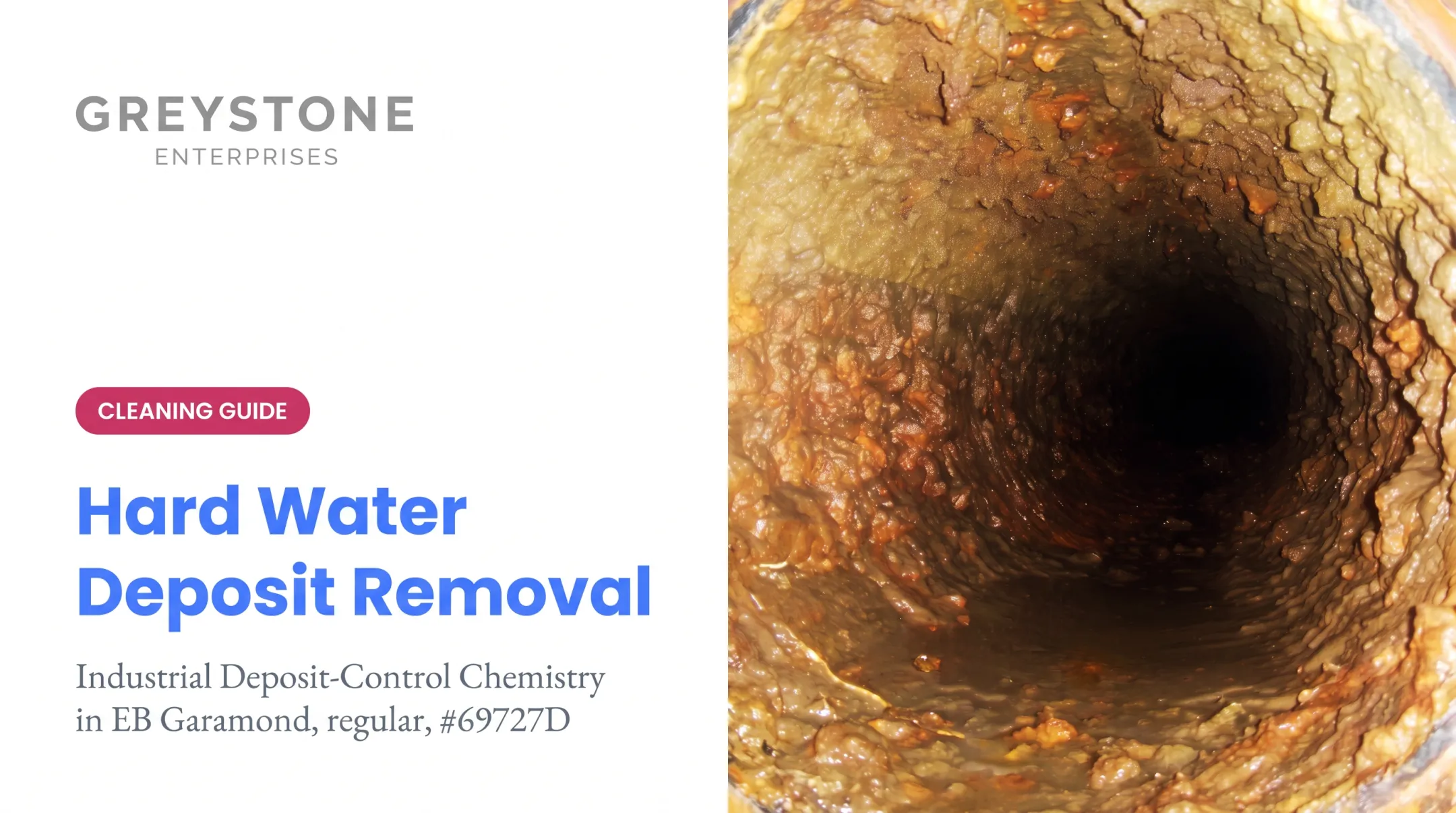

Pipe descaling is the removal of hardened deposits from internal pipe surfaces. In industrial settings, the right method depends on the deposit, the pipe material, process conditions, and the condition of the asset.
This article covers how to identify scale, how chemical, mechanical, and high-pressure methods compare, how to plan a safe removal program, and how to keep deposits from coming back.
Key Takeaways
- "Scale" can mean mineral deposits, corrosion tubercles, or process fouling, and each needs a different fix.
- Inspect and identify the deposit before choosing chemicals, tools, or pressure.
- Plan for downtime, worker safety, wastewater, and sanitation requirements.
- Treat descaling as condition-based maintenance, not emergency cleaning.
What Is Pipe Descaling and What Causes Scale?
Descaling removes hardened internal deposits. Three categories get lumped together, and mixing them up leads to the wrong treatment:
- Mineral scale: ASHRAE defines it as deposits that form when dissolved minerals become oversaturated and precipitate. Calcium carbonate is the classic example; calcium phosphate, calcium sulfate, and magnesium silicate also show up.
- Corrosion tuberculation: small mounds of corrosion products over metal. It differs from mineral scale, though the two can coexist.
- Process fouling: biofilm, product residue, and mixed organic and inorganic deposits. Grease, roots in sewer lines, and organic buildup belong here, not under "scale."
How deposits hurt performance
ASHRAE's handbook notes that deposits restrict flow and interfere with heat transfer, and some promote under-deposit corrosion.
For heat-transfer systems, the Department of Energy reports scale-related efficiency losses of 1% to 7% in industrial process heating. That range applies to heating equipment, not to every pipe network, so measure your own system rather than borrowing the number.
Where it shows up
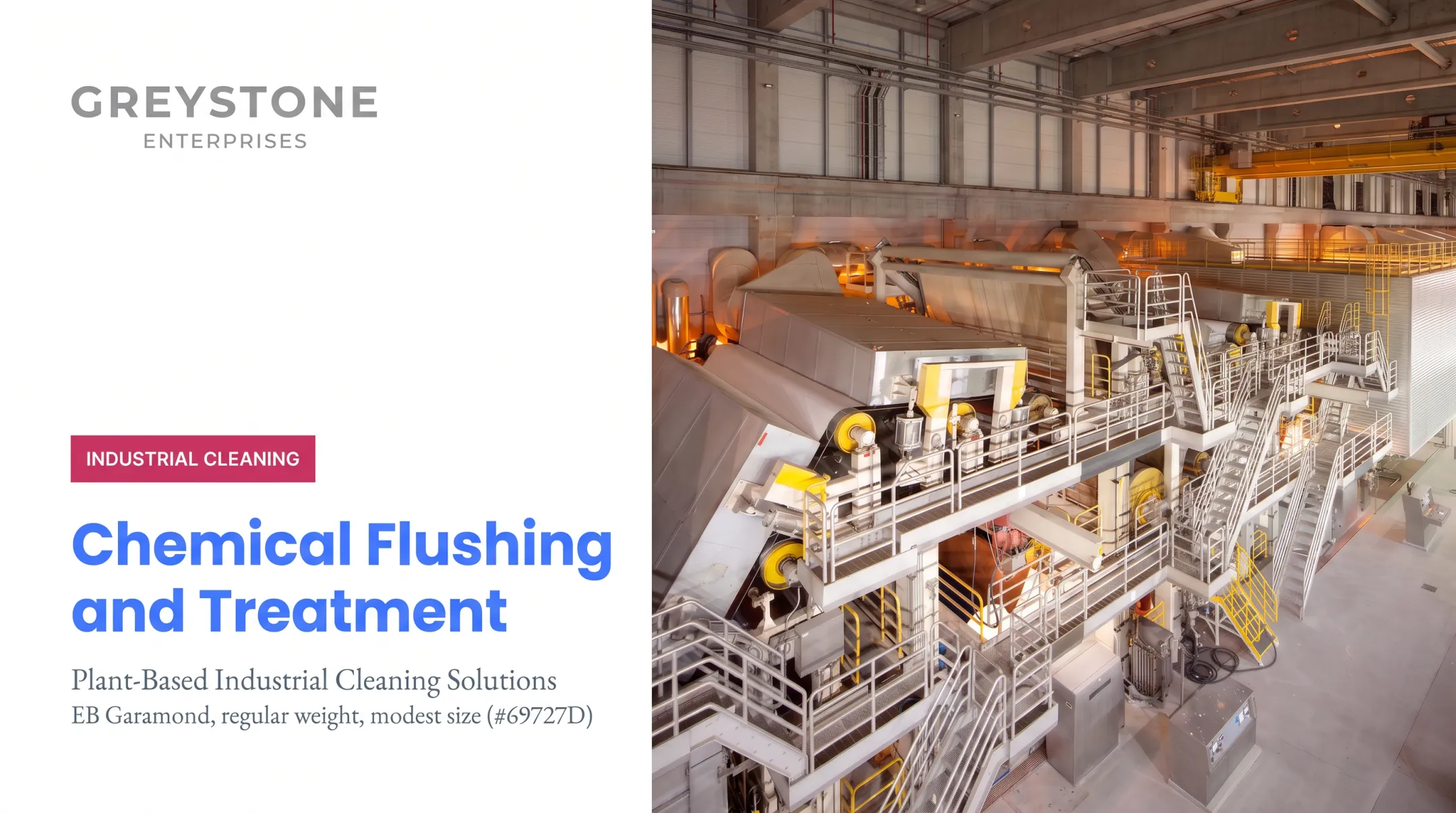
Scale appears in heat-transfer systems, tanks, process piping, paper-machine approach piping, and sewer lines. One kraft mill documented calcium-carbonate scale in green-liquor lines and a dissolving tank.
Greystone's Bubble-Up process targets similar problems in approach piping and headboxes, where mineral scale, hydrolyzed starches, polymers, and pitch collect.
Descaling versus cleaning versus replacement
- Descaling: removes hardened mineral or corrosion deposits.
- Routine cleaning: handles residue, grease, and product soils.
- Replacement or repair: required when cracking, wall loss, or structural damage exists. Removing deposits does not restore the pipe wall.
Signs a Pipe System Needs Descaling
Watch for these warning signs:
- Reduced flow or pressure
- Rising differential pressure across a line or exchanger
- Inconsistent temperatures or slower equipment performance
- Frequent blockages
- Deposits that return quickly after cleaning
Confirming the diagnosis
Trends point you toward a problem but don't prove the cause. A refinery fouling study estimated deposition from measured pressure drop and validated it against temperatures. Confirm the cause directly:
- Review inspection records and flow, pressure, and temperature history.
- Run a camera or borescope inspection.
- Sample the deposit and analyze its composition.
- Check pipe age, material, and wall thickness. Ultrasonic testing measures wall loss, not deposit chemistry.
The cost of waiting
A TAPPI mill report describes severe calcium-carbonate scale in green-liquor lines that forced a shutdown in October 2017. Hydroblasting at 20,000 psi for 12 hours failed to remove it. One mill's experience is not universal, yet it still shows that delay makes restoration harder and that pressure alone does not dissolve hard scale.

Other consequences of delay include:
- Contamination or sanitation concerns
- Inefficient operation
- Accelerated corrosion
- Leaks
Pipe Descaling Methods for Industrial Scale Removal
Mechanical Descaling
Brushing, rotary cutters, scrapers, and pigging physically break deposits loose. They suit heavy or localized buildup.
Limits to plan around:
- Access to both ends of the line
- Risk to thin, corroded, or lined walls
- Debris recovery
- Tool match to diameter and material
- Need for a piggable line
Chemical Descaling
Acids, chelants, and specialty formulations dissolve or loosen deposits. No universal cleaner exists. Selection depends on the deposit and on compatibility with the base material, including joints, elastomers, and coatings.
Controls to build into any chemical job:
- Review safety data sheets before anything is opened
- Set concentration and contact time
- Isolate, ventilate, rinse, and neutralize
- Handle and document spent chemistry and wastewater
- Never improvise with household acids or mix chemicals
For example, Greystone's SolveTec PurClean MAC is a multi-acid mineral cleaner that is safe on all surfaces except yellow metals, while PurClean BA is an organic acid descaler for barium and calcium scales. Yellow-metal exclusions like this are why material review comes first.
High-Pressure Water, Hot Water, and Steam
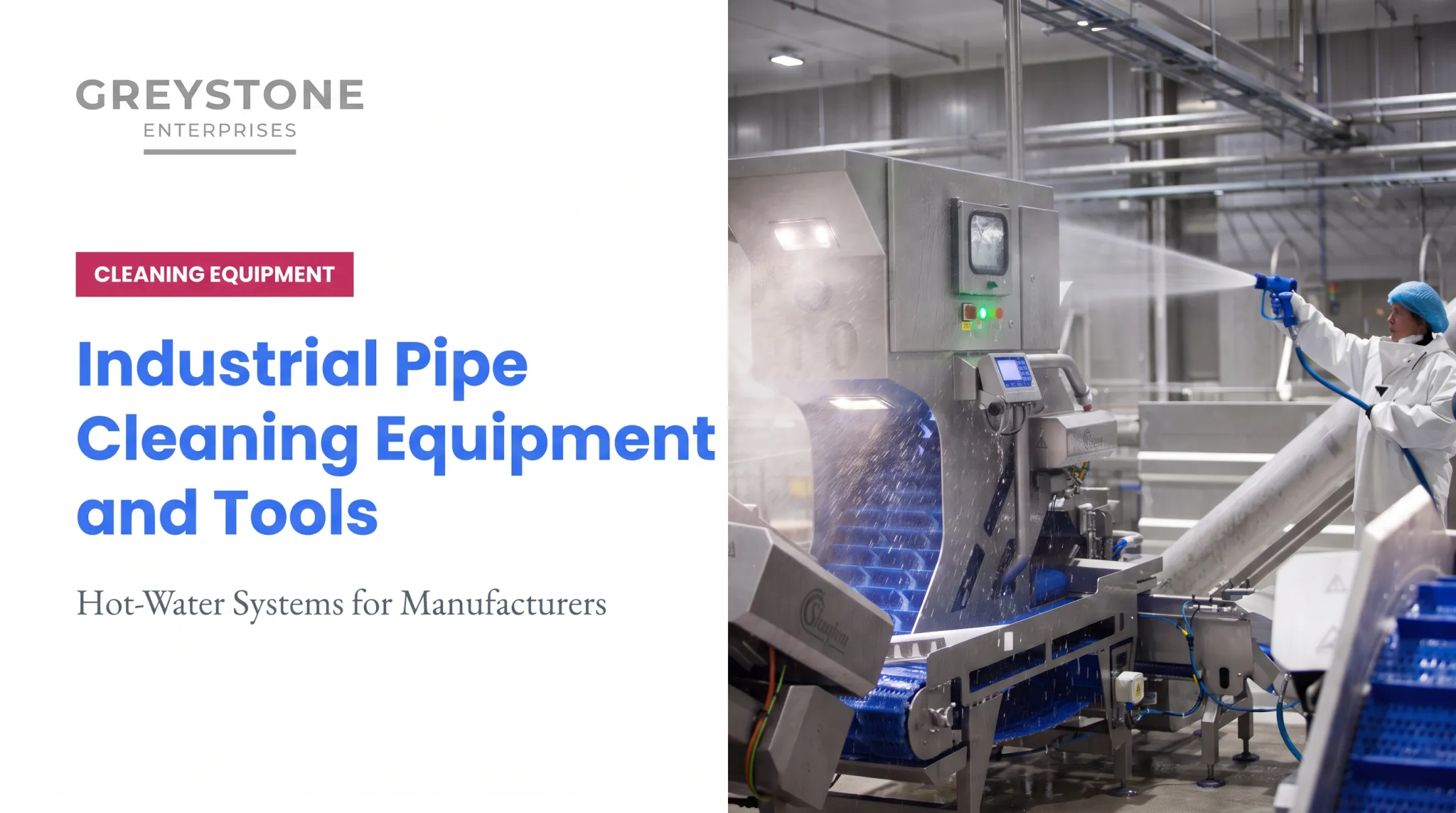
Hydro jetting removes scale and process residue mechanically. Control pressure, flow, nozzle selection, access, and debris capture. The Water Jet Technology Association's best-practices document requires site hazard assessment and training.
Hot water and steam clean and sanitize well, but they do not automatically dissolve every mineral deposit.
Integrated and Facility-Specific Approaches
Staged work usually beats a single method:
- Inspect the line
- Remove bulk deposit mechanically
- Apply compatible chemistry
- Rinse with high pressure
- Verify results
Where it fits, Greystone can evaluate a strategy combining HelioJET high-pressure hot-water and steam technology with Tri-Solve plant-based chemistries, subject to deposit, material, process, safety, and discharge compatibility.

A Simple Method-Selection Framework
| Factor | Question to answer |
|---|---|
| Deposit type | Mineral, corrosion, organic, or mixed? |
| Pipe material | Steel, copper, lined, mixed metals? |
| Severity | Thin film or near blockage? |
| Access | Can tools or jets reach the full length? |
| Schedule | How long can the line be down? |
| Sanitation | Food, pharma, or general process? |
| Waste | Where does spent chemistry go? |
How to Plan and Execute Safe Scale Removal
Start with assessment
Document the line before you choose a method:
- Pipe material, diameter, age, and lining
- Wall condition and deposit composition
- Process fluid, operating temperature, and pressure
- Access points and isolation options
- Production cost of taking the line offline
Then select the treatment against these factors:
- Chemical compatibility and mechanical risk
- Pressure limits and hygiene requirements
- Hazardous-area controls and environmental obligations
- Whether clean-in-place is possible
Controlled work sequence
- Isolate and drain the system.
- Protect connected equipment.
- Apply lockout/tagout under OSHA 29 CFR 1910.147 and set PPE requirements.
- Check whether any tank or vessel is a permit-required confined space under 1910.146.
- Perform the treatment.
- Capture debris and spent chemistry.
- Flush or neutralize as required.
- Restore the system per site procedures.
Greystone's own HelioPAC safety instructions follow the same logic. Steam and water supplies are shut off and locked out before nozzles are cleaned or changed. Operators use a face shield, wet suit, boots, and gloves in a well-ventilated area.
Regulatory points to check
- Chemicals: OSHA Hazard Communication requires a written program, labels, accessible safety data sheets, and training.
- Hazardous locations: electrical equipment must meet 29 CFR 1910.307.
- Wastewater: POTW discharges fall under 40 CFR Part 403, which bars interference-causing pollutants and, absent an exception, discharges below pH 5.0. Local limits may be stricter.
- Food and pharma: 21 CFR Part 117 and 21 CFR 211.67 require documented cleaning procedures and records.
Verification
- Before-and-after visual or camera inspection
- Flow and pressure comparison against baseline
- Rinse-water evaluation
- Wall-thickness checks where metal loss is a concern
- Sanitation validation where required
- Written documentation of treatment and findings
Cost and downtime drivers
Costs track deposit severity, pipe length and diameter, access, labor, equipment, chemical handling, waste disposal, and production interruption. Get site-specific quotes rather than generic per-foot figures.
Weigh descaling against repair or replacement when wall loss is significant.
Preventing Scale and Building a Maintenance Program
Preventive controls
- Monitor water and process chemistry
- Treat incoming water where appropriate
- Control operating temperatures
- Manage product residue
- Address corrosion sources that feed tuberculation
ASHRAE describes chelates, polymers, and acrylates that bind hardness and inhibit precipitation, but treatment must suit the process and materials. Greystone's Tri-Solve ScaleTrol, for instance, is an additive aimed at calcium sulfate and carbonate scale in process systems.
Condition-based maintenance
Track flow, pressure, temperature, pump or energy behavior, inspection findings, and recurring deposit patterns. Let that data set your cleaning triggers.
Intervals vary. The TAPPI mill cleaned its green-liquor lines every six months, and Greystone recommends servicing HelioPAC 1500 units every six months because scaling depends on use frequency and local water hardness. Neither is a universal interval; your own trends decide.

Sustainability and compliance
Evaluate these factors when you build the program:
- Water use and chemical selection
- Energy demand and wastewater
- Debris recovery and worker exposure
Plant-based chemistries and Bubble-Up foam cleaning can cut chemical use and time compared with a traditional Boilout when approach piping can be isolated. The biggest payoff is often fewer emergency shutdowns.
Frequently Asked Questions
What do plumbers use to clean copper pipe?
Match the method to the deposit and the pipe's condition. Options include a compatible professional descaling chemistry, controlled flushing, or a gentle mechanical approach. Avoid unverified acids, abrasive tools, and chemical mixtures, and follow the cleaner manufacturer's rinse procedure.
What is the best thing to clean sewer pipes?
Mineral scale, grease, organic buildup, roots, and structural damage each need different treatment. Hydro jetting and mechanical rodding clear deposits; inspection decides whether repair or replacement is needed instead.
How do you know when a pipe needs descaling?
Look for reduced flow, pressure changes, recurring blockages, and unusual operating trends. Confirm with camera inspection or deposit analysis before treating.
Can pipe descaling damage old or fragile pipes?
Yes. Excess pressure, aggressive tools, or incompatible chemicals can damage corroded, lined, or brittle pipe. Assess material, wall condition, and structural integrity first.
What is the difference between pipe descaling and pipe cleaning?
Descaling targets hardened mineral or corrosion deposits. Cleaning handles routine residue, grease, organic matter, and product soils. Each fouling type may need different equipment and chemistry.