
The market is still small. USDA's 2023 update estimated that bio-based chemicals made up about 1.9% of the U.S. chemical sector in 2021. That is a historical estimate, not a current total.
This guide covers what bio-based chemicals and enzymes are, how they're made, where they're used, and what to verify before you buy. One distinction runs through all of it: bio-based does not automatically mean biodegradable, non-toxic, or lower-impact.
Key Takeaways
- Bio-based describes where a chemical's carbon comes from, not how safe or green it is.
- Enzymes make processes more selective, but results depend on temperature, pH, substrate, and formulation.
- Real environmental profiles depend on feedstock, processing energy, transport, and end of life.
- Compare performance, safety, regulatory fit, lifecycle evidence, supply, and total cost of use.
What Are Bio-Based Chemicals?
Bio-based chemicals are made wholly or partly from biomass instead of fossil feedstocks. USDA defines a covered biobased product as a commercial or industrial product other than food or feed. It must be composed wholly or significantly of biological products, or of renewable agricultural, forestry, or renewable-chemical materials. Intermediates and feedstocks are included.
Common feedstocks include:
- Starch and sugar crops
- Agricultural residues
- Forestry thinnings and residuals
- Purpose-grown crops
- Municipal solid waste
- Algae and seaweed
The term describes origin. It says nothing by itself about biodegradability, toxicity, or lifecycle performance.
Bio-Based vs. Related Sustainability Claims
These claims are often blurred, and each needs its own evidence:
- Bio-based: ASTM D6866 measures biobased carbon through radiocarbon analysis. It does not measure environmental impact or performance.
- Renewable: Under FTC guidance, an unqualified claim generally requires a product made entirely from renewable materials, apart from minor, incidental components.
- Biodegradable: An unqualified claim must cover the whole product. For solid waste, the FTC guidance uses one year after customary disposal.
- Compostable: Requires scientific evidence that all materials become usable compost safely and in a timely manner.
- Non-toxic: Requires evidence of safety for people and the environment.
- Low-carbon: Needs a lifecycle assessment (ISO 14040/14044), not a biobased-content test.
A plant-derived cleaner can be bio-based yet not biodegradable under a given standard. Ask for lifecycle data, recognized certification, product-specific technical documents, and end-of-life instructions.
Common Examples and Product Categories
USDA's BioPreferred program lists 139 product categories and more than 8,700 products, including cleaners, lubricants, carpet, and insulation. Broader categories include solvents, surfactants, polymers, and specialty intermediates.
Two examples:
- Polylactic acid (PLA): NatureWorks describes starch feedstocks converted to dextrose, fermented to lactic acid, then polymerized.
- Ethyl lactate: EPA's 1998 Green Chemistry award page describes this solvent as made from carbohydrates and easily biodegradable.
Neither example proves that all bio-based products biodegrade or fit every use.
How Are Bio-Based Chemicals Produced?
Most pathways follow the same arc: feedstock selection and preparation, conversion, separation, purification, formulation, quality testing, and distribution. Each stage affects cost and consistency.

Feedstock Selection and Pretreatment
Feedstocks need preparation such as milling, hydrolysis, extraction, or fractionation. Supply is the harder part. USDA's biomass supply-chain report cites specialized equipment and drying needs, rural road and bridge limits, and few large-scale domestic preprocessing facilities.
DOE's 2023 Billion-Ton Report suggests U.S. biomass production could potentially exceed 1 billion tons annually. That is a potential scenario, not guaranteed supply.
Fermentation and Biological Conversion
Microorganisms convert sugars into acids, alcohols, and intermediates. PLA is the clearest commercial example: fermentation of dextrose produces lactic acid, which is then polymerized. NatureWorks does not publish a capacity figure for that route.
Enzymatic Conversion and Chemical Transformation
Enzymes can break down complex biomass or transform molecules selectively. NREL's 2022 design report models one lignocellulosic route: pretreatment, enzymatic hydrolysis, fermentation, intermediate recovery, and catalytic upgrading. It is a modeled pathway, not a universal recipe.
The two ideas are separate:
- Bio-based: the feedstock is biological.
- Bio-enabled: enzymes or microbes are used in the process, whatever the feedstock.
Purification, Scale-Up, and Lifecycle Verification
Downstream separation often decides whether a product meets customer specifications. NREL warns that bench-scale results may not transfer directly to large scale. Its modeled case uses solid-liquid separation and reports 95% sugar retention for that case.
Lifecycle results vary by scenario. A 2021 cup study found polypropylene performed better in five of six impact categories in the base case, while PLA used less fossil resource.
With future electricity, PLA showed 25% lower greenhouse gas emissions. Including land-use change cut that advantage to 10%. These results are specific to cups and are not a general resin ranking.

Without a product-specific LCA, energy, water, and waste figures should not be treated as transferable across products.
What Role Do Enzymes Play in Bio-Based Processes?
Enzymes are biological catalysts that speed specific reactions and are not consumed like reactants. They are selective and can work under comparatively mild conditions.
Enzyme Classes and Substrate-Specific Functions
A peer-reviewed review of industrial enzymes supports these uses:
| Enzyme | Industrial applications |
|---|---|
| Amylases | Starch processing in baking, brewing, alcohol production |
| Cellulases | Bioethanol, textile polishing, detergents |
| Xylanases | Food processing, paper and pulp bleaching |
| Proteases | Dairy and cheese processing |
| Lipases | Food, detergent, pharmaceutical, leather, textile, paper |
Selection depends on the target material, desired reaction, pH, temperature, contaminants, residence time, and product specifications.
Laccases and related enzymes also show up in wastewater treatment, where milder reaction conditions help limit secondary waste.
Operating Conditions, Stability, and Formulation
Activity and stability are enzyme-specific. Temperature, pH, and substrate or product inhibition all matter. No universal operating range or storage-life benchmark applies.
Plan for deactivation with:
- Process controls and correct dosing
- Compatible formulations
- Validation under real operating conditions
Safety, Compliance, and Performance Validation
Worker exposure needs active controls. NIOSH identifies inhalation, sensitization, and asthma hazards for subtilisins, with a short-term recommended limit of 0.00006 mg/m³. That figure is substance-specific, not a universal enzyme limit.
Other checks:
- OSHA's Hazard Communication Standard covers respiratory and skin sensitization and requires 16-section SDSs for hazardous chemicals.
- FDA guidance says food-enzyme preparations may be supported through a GRAS route, but not all are GRAS.
- EPA's TSCA biotechnology review covers certain new microorganisms, not enzyme preparations in general.
Validate performance against defined outcomes:
- Cleaning effectiveness and conversion yield
- Product quality and processing time
- Water and energy use
- Equipment compatibility
Where Are Bio-Based Chemicals and Enzymes Used?
Uses fall into two cases: substituting the product itself, and improving the process that makes or maintains it.
Materials, Packaging, and Consumer Products
PLA is the best-documented example. EPA says compostable plastics are designed for commercial or industrial composting, shouldn't be assumed suitable for home composting, and can disrupt conventional plastic recycling. NatureWorks adds that compostability depends on temperature, humidity, and time, and that facilities may not be local.
Before specifying any bio-based polymer, verify:
- Strength and durability
- Barrier properties (request supplier data for the specific grade)
- Recyclability
- End-of-life requirements
Fuels, Solvents, and Energy Applications
- EIA describes renewable diesel as a biomass-derived hydrocarbon chemically equivalent to petroleum diesel, made by hydrogenation. Biodiesel is made by esterification.
- DOE defines renewable natural gas as purified biogas meeting pipeline specifications, which qualifies as an advanced biofuel under the Renewable Fuel Standard.
- EPA's RFS sets a 50% lifecycle greenhouse gas reduction threshold for biomass-based diesel pathways. Don't generalize it to all biofuels.
Sustainability depends on feedstock, conversion pathway, emissions, land use, and energy inputs.
Food, Pharmaceutical, Cosmetic, and Specialty Uses
Enzymes and bio-based ingredients appear in food, pharmaceuticals, personal care, adhesives, coatings, and lubricants. Purity, contamination control, consistency, and regulatory approval matter most where food, medicine, or skin contact is involved.
Industrial Cleaning, Sanitation, and Process Operations
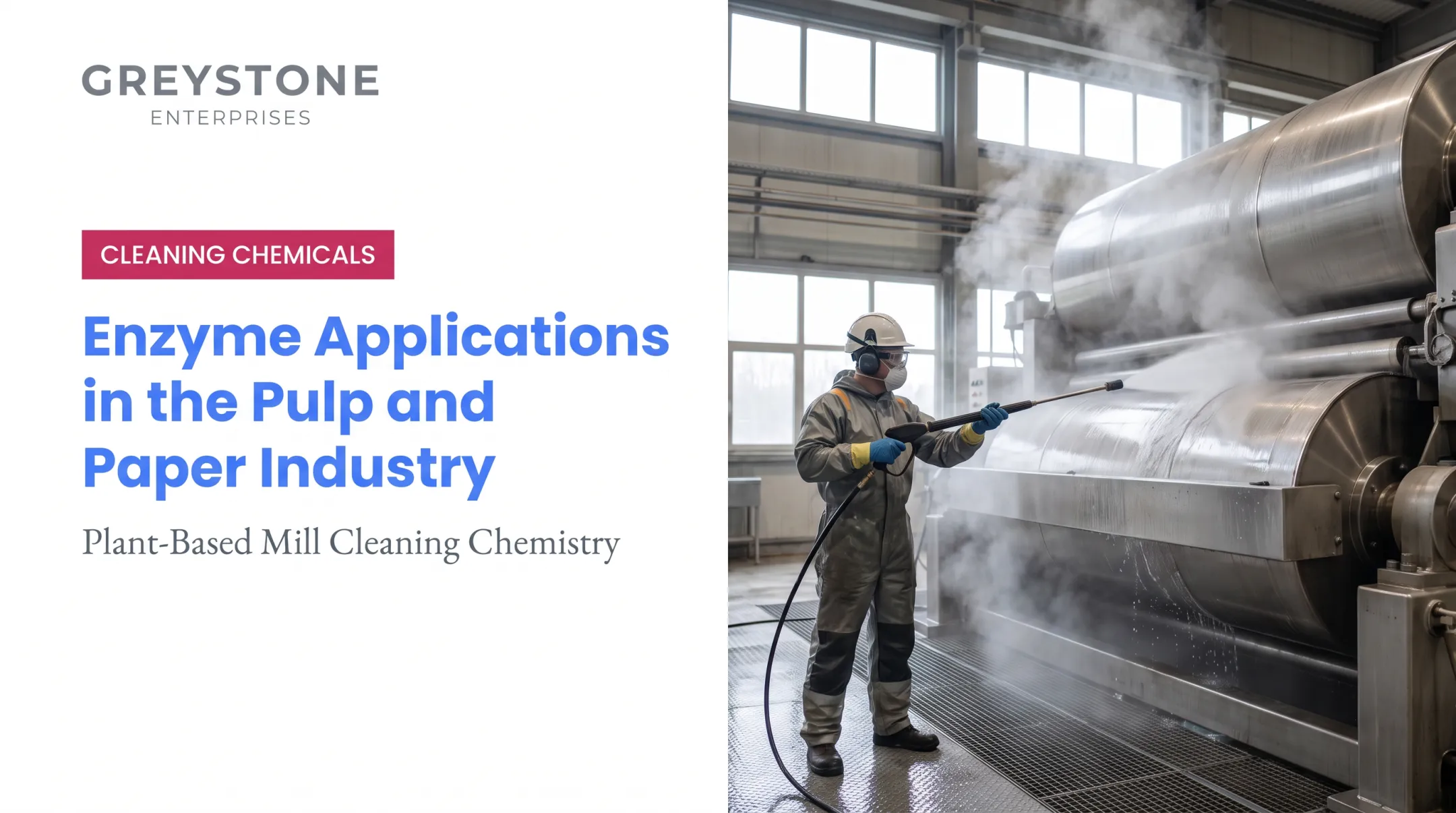
Plant-based surfactants, solvents, and enzyme-containing formulations can support cleaning of equipment, tanks, vessels, and paper machinery. Cleaning, sanitizing, and disinfecting are different jobs, per EPA: removing dirt, reducing bacteria to public-health levels, and destroying bacteria and viruses. Antimicrobial claims fall under EPA's pesticide program.
Greystone offers one example. Its Tri-Solve plant-based chemistries are paired with HelioJET high-pressure hot-water and steam technology to build facility-specific cleaning strategies. Not every Tri-Solve product is enzyme-based.
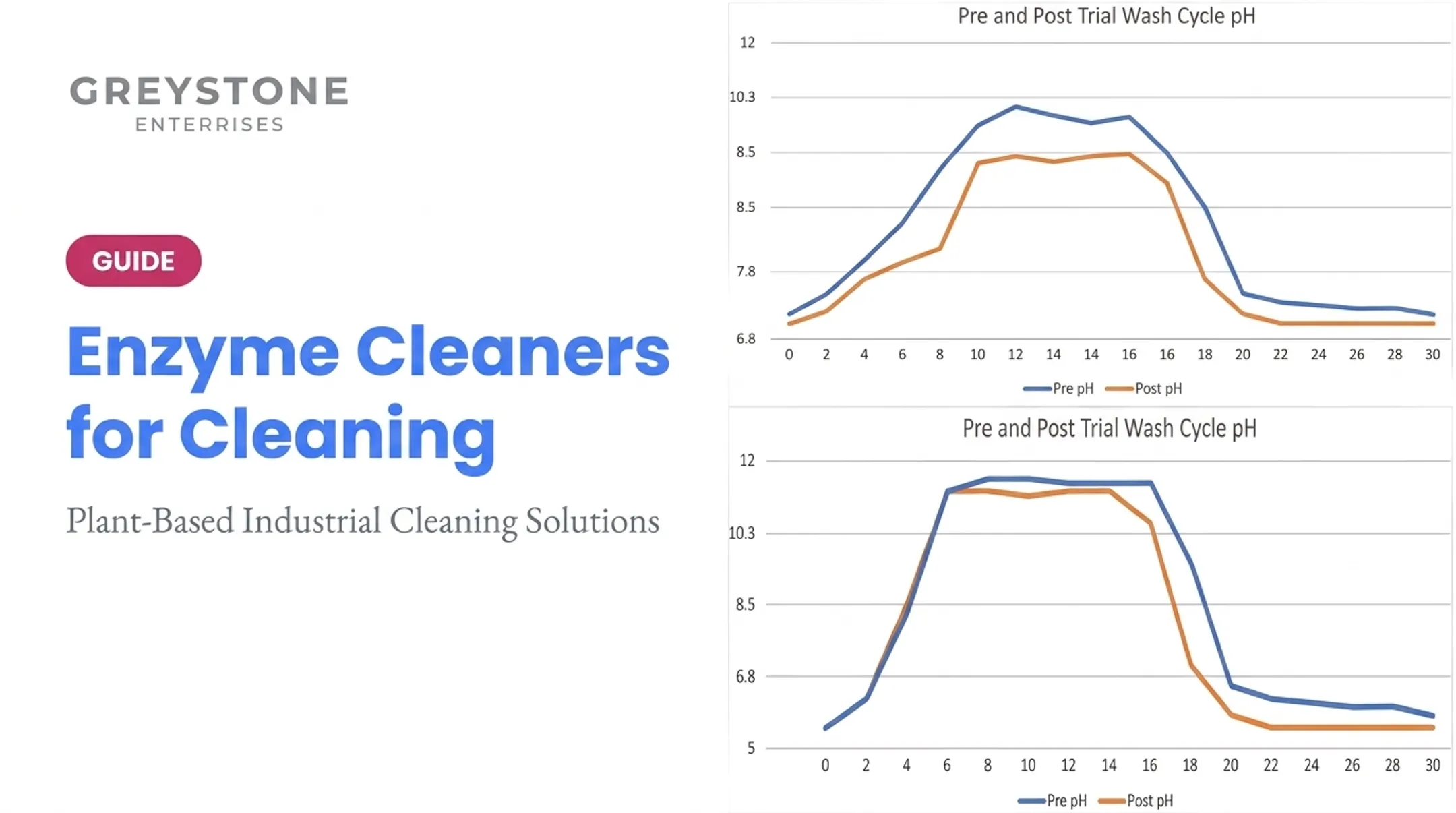
In an enzymatic felt cleaner trial at a paper mill, Greystone reported improved cleaning efficiency, felt permeability, and felt service life. Total wash dosage fell from 27 gallons to 20, and average rinse time dropped from over 25 minutes to 18. These are trial results from one mill, not guarantees.

Facilities should measure:
- Soil removal
- Sanitation validation, where applicable
- Chemical, water, and energy use
- Labor and downtime
- Equipment compatibility
- Compliance documentation
Benefits, Challenges, and Industrial Evaluation
Potential benefits include:
- Renewable feedstock use
- Less fossil dependence
- Selective catalysis
- Lower-temperature processing
- Progress on sustainability targets
Comparative claims still need lifecycle evidence.
Common adoption challenges:
- Cost competitiveness and scale-up
- Feedstock availability and supply reliability
- Formulation changes and customer qualification
- Regulatory approval
- Uncertain end-of-life pathways
Buyer Checklist
| Evidence | What it supports | What it doesn't establish |
|---|---|---|
| ASTM D6866 | Biobased carbon content | Low carbon, biodegradability, performance |
| USDA BioPreferred | Eligibility and tested content | Low lifecycle emissions |
| ISO 14040/14044 | LCA framework | Results without a comparable study |
| EPA Safer Choice | Voluntary ingredient and performance review | Biobased content, antimicrobial registration |
Also confirm:
- SDS and regulatory documents
- Supply continuity
- Total cost of ownership
- Equipment compatibility
- Worker safety
- Supplier support
Run a pilot before switching. Set baselines for chemical use, water, energy, downtime, and cleaning results so you can measure what changed.
Frequently Asked Questions
What are some examples of bio-based products?
USDA's program includes cleaners, lubricants, carpet, and insulation. Others include plastics, solvents, surfactants, and fuels. Bio-based refers to origin, not proven biodegradability.
What are examples of biocides?
Biocides control harmful organisms and include disinfectants, sanitizers, and preservatives. EPA regulates antimicrobial pesticides. A biocide is not automatically bio-based or enzyme-based.
What are the three types of biofuels?
EIA and DOE materials discuss biodiesel, ethanol, renewable diesel, and renewable natural gas. Taxonomies differ by source, so confirm which framework applies when you compare types.
Are bio-based chemicals the same as biodegradable chemicals?
No. Bio-based describes biological origin. Biodegradable describes breakdown under specified conditions. A product can meet one without the other.
How are enzymes used in industrial cleaning and manufacturing?
Enzymes target proteins, fats, starches, and plant fibers. Examples include cellulase in detergents and xylanase in pulp processing. Results depend on conditions, formulation, safety, and validation.