
This guide covers industrial process vessels, tanks, mixers, reactors, and totes. Ship-hull cleaning follows different procedures, and the FAQ addresses it briefly. The process runs in five stages: identify the residue and materials, prepare the equipment safely, choose a method, complete the cleaning cycle, and verify the result.
Key Takeaways
- Identify the residue and vessel materials before choosing a chemical or method.
- Write isolation, PPE, confined-space, chemical, and high-pressure controls into the procedure.
- Pick manual, CIP, hot water, steam, or a combination based on vessel geometry.
- Verify, document, dry, and maintain the vessel after every cycle.
Why Vessel Cleaning Matters
Residual product, oils, scale, biofilm, and leftover cleaning agent all carry into the next batch. The consequences depend on the industry.
The FDA's drug rule under 21 CFR 211.67 requires written cleaning procedures, protection of clean equipment, and cleaning records. Food rules require food-contact surfaces to be cleaned often enough to prevent contamination and allergen cross-contact.
Biofilm is a good example of why rinsing alone isn't enough. A 2023 pilot-scale study found that a water pre-rinse cut Pseudomonas fluorescens biofilm by only about 1.2 log, while alkaline cleaning cut it by roughly 5 log. Those are study-specific results, not plant guarantees, but they show that chemistry and mechanical action matter.

Equipment and Operational Payoff
Buildup concentrates in predictable places:
- Agitators and shafts
- Baffles and spray devices
- Outlets and nozzles
- Gaskets and welds
Cleaning these areas thoroughly protects equipment, cuts unplanned downtime, and supports worker safety. A documented program also gives you evidence when auditors or customers ask how a vessel was cleaned. It doesn't guarantee compliance on its own, but it's the foundation.
Prepare the Vessel and Work Area Safely
Start with paperwork. Review these items before you choose any chemical:
- Previous contents and residue hazards
- Materials of construction
- Cleaning history
- Manufacturer instructions
- Facility procedures
Isolate the Vessel
- Empty, drain, and depressurize the vessel.
- Disconnect or blind related lines.
- Apply lockout/tagout so no agitator, pump, or valve starts unexpectedly.
OSHA's energy-control rule requires verified isolation.
Treat Entry as a Last Resort
Ask first whether anyone needs to enter at all. Automated tank washing often removes the need. If entry is unavoidable, OSHA's permit-required confined space standard applies:
- Permit and trained personnel
- Atmospheric testing (oxygen first, then flammables, then toxics)
- Ventilation and an outside attendant
- Communication and a rescue plan
The stakes are real: BLS recorded 1,030 confined-space worker deaths from 2011 to 2018 across industries.
PPE and Chemical Controls
Use the product label and Safety Data Sheet to set requirements for gloves, eye and face protection, protective clothing, and respiratory protection. Beyond PPE:
- Confirm chemical compatibility with hoses and fittings
- Label all containers clearly
- Restrict access during high-pressure work
- Manage hoses to prevent trips and whipping
- Collect wastewater and check your sewer permit before discharge
Pressure equipment adds its own limits. Greystone's HelioPAC instructions, for example, require you to:
- Lock out steam and water before changing nozzles
- Keep inlet pressure at or below 250 psi
- Use hardware rated for the maximum discharge pressure and temperature
Defective hoses and fittings stay out of service.

Choose the Right Vessel-Cleaning Method and Chemistry
Start with the Soil
No single cleaner works for every vessel. University of Florida food-processing guidance notes that acid cleaners dissolve mineral soils, while alkaline cleaners handle fats, oils, and proteins. Solvents may be needed for some charred or carbonized residues. Classify what you're removing:
- Water-soluble product
- Oils and grease
- Dried or baked-on product
- Mineral scale
- Organic or biological films
- Residues needing specialized treatment
Match Chemistry to the Vessel
Check compatibility with stainless steel, carbon steel, coatings, elastomers, gaskets, sight glasses, and sensors before use. There's no blanket concentration that is safe for every stainless grade or seal compound. Test on a small area and consult the manufacturer.
Compare the Methods
| Method | Best for | Limits |
|---|---|---|
| Manual (brushes, pads, scrapers) | Small or accessible vessels | Labor-intensive, entry risk, inconsistent on large or complex equipment |
| CIP with spray devices | Repeatable cleaning of enclosed vessels | Coverage must be confirmed around baffles, agitators, and nozzles |
| High-pressure hot water or steam | Stubborn buildup, as a supplement | Needs surface compatibility, trained operators, safe standoff |
For CIP, confirm spray coverage rather than assuming it. A riboflavin test can show whether spray devices wet every surface, though it doesn't prove residue removal.
Where Greystone Fits
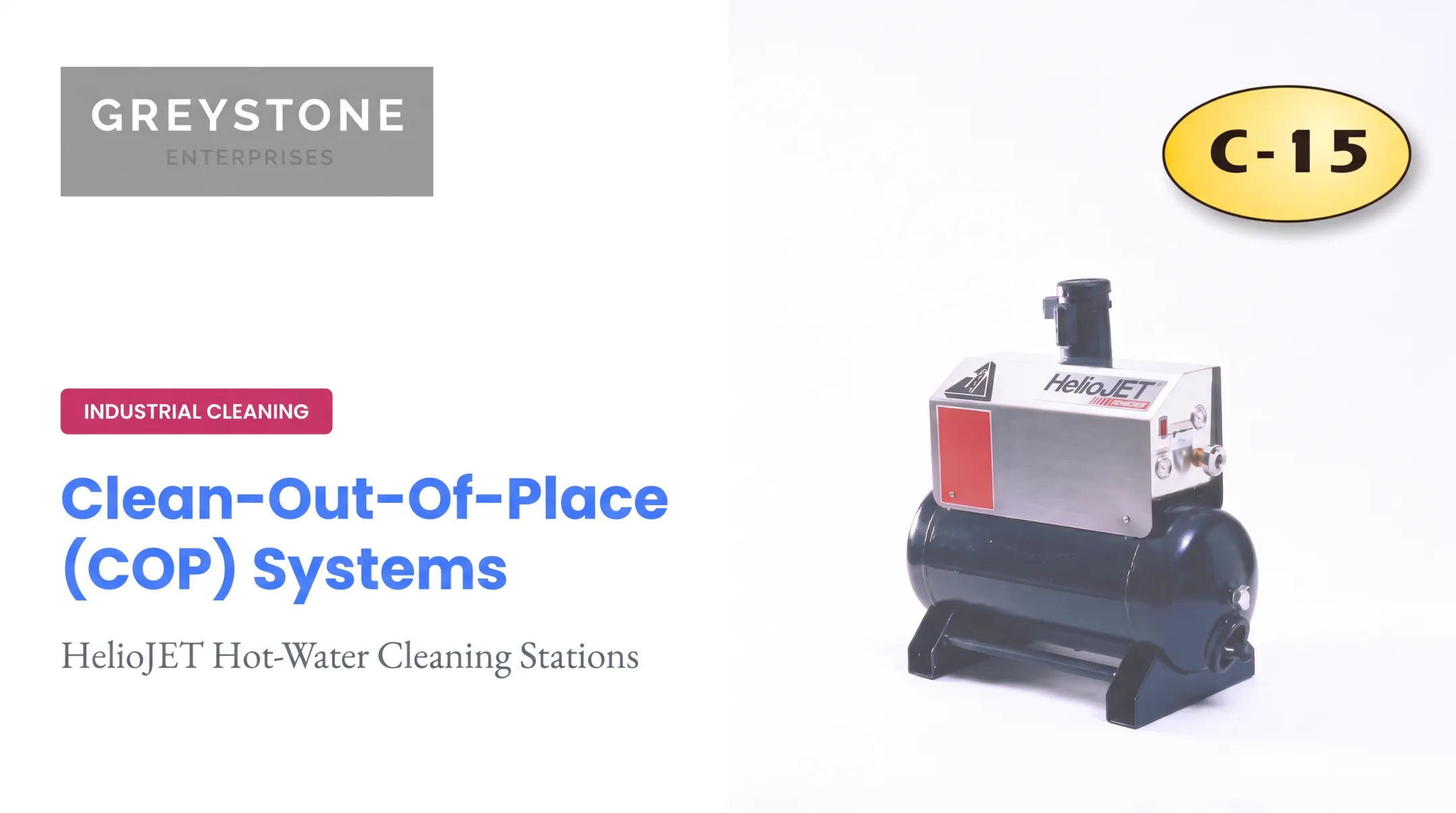
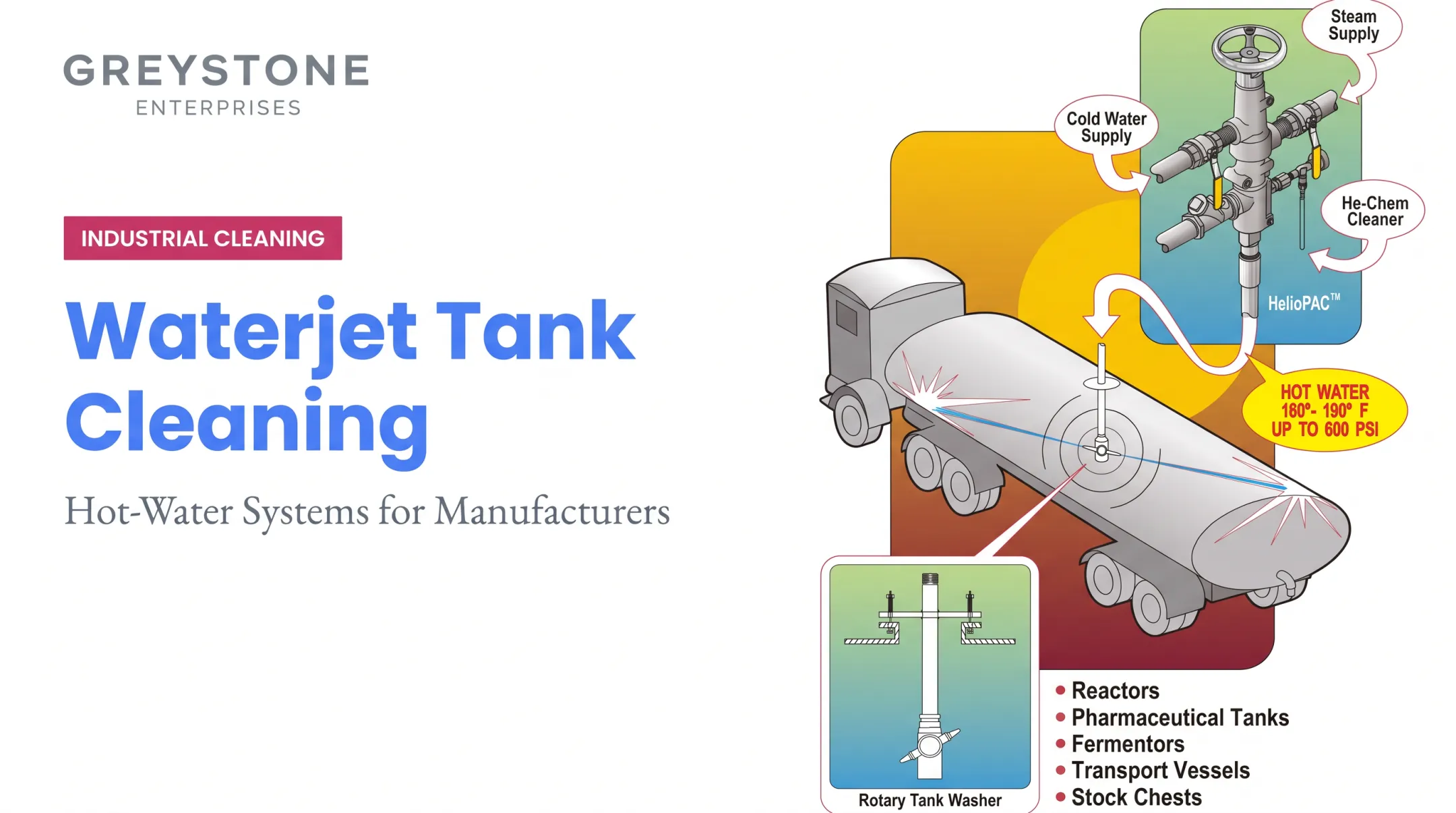
One option to evaluate is Greystone's approach: HelioJET interior tank washing paired with Tri-Solve plant-based chemistries and a facility-specific strategy. HelioJET systems use hot water at 160 to 190°F and up to 600 psi with rotary tank washers.
Greystone reports most tanks clean in 6 to 12 minutes, though some jobs need more than one cycle. It suits process plants cleaning tanks, totes, and mixers between batches. Whether it fits your vessels depends on your soils, materials, and validation requirements.
Follow a Step-by-Step Vessel-Cleaning Process
- Write the plan. Record the vessel, previous product, target cleanliness, chemistry, equipment settings, contact time, rinse requirements, responsible personnel, and waste handling.
- Remove bulk residue and pre-rinse. Keep loosened material from washing into connected piping, drains, or other equipment.
- Apply the cleaning solution. Use the manufacturer's concentration and temperature. Contact time, coverage, flow, mechanical action, and solution condition all drive results.
- Clean. Use scrubbing, CIP circulation, hot water, steam, or a controlled combination. Give extra attention to heads, seams, welds, agitator shafts, baffles, outlets, nozzles, and gaskets.
- Rinse. Continue until cleaning agent and loosened residue are gone. Neutralization, an intermediate rinse, or a specified water grade applies only where your procedure requires it. FDA notes Water for Injection is expected for final washing of parenteral equipment, but water quality depends on the product.
- Drain and dry. FDA guidance says stagnant water shouldn't remain after cleaning. Cap or cover cleaned openings.
- Document. Note remaining residue, damage, odors, or deviations.

Sanitizing Is Separate
In food operations, sanitizing follows wet cleaning when necessary and doesn't replace soil removal. Surfaces should be thoroughly dry before use.
Inspect, Verify, and Maintain the Vessel
Inspect the Whole Cleaning Path
Look at every accessible surface, plus the connected path: shadows, welds, outlets, agitators, spray devices, and gaskets. Pay special attention to known problem spots.
Pick Verification Tools Carefully
Visual checks are subjective, so pair them with something measurable. Each method answers a different question:
- Swab sampling: FDA calls direct surface sampling the most desirable general method.
- Rinse sampling: Reaches large or inaccessible areas but can miss insoluble or hidden residue.
- ATP testing: Measures organic matter, not bacteria, so treat it as a general cleanliness estimate only (Cornell fact sheet).
- TOC or residue-specific assays: Suitable when matched to the target residue.
FDA sets no universal residue limit. Your site must justify its limits and show the method can actually detect the residue.
Record and Improve
Log each clean so recurring problems stay traceable:
- Method, chemistry, concentration, and temperature
- Contact time and operator
- Inspection result, deviations, and corrective actions
- Maintenance findings
Watch for warning signs:
- Repeated buildup in the same place
- Rising cleaning times
- Corrosion or coating damage
- Failed verification
Any of these suggests reassessing chemistry, spray coverage, vessel design, frequency, or whether a customized system is warranted. For pressure equipment, also keep up routine checks. HelioJET, for example, recommends monthly inspections to confirm pressure-switch and handwheel settings haven't drifted.
Frequently Asked Questions
What is the best way to clean the hull of a vessel?
Marine hull cleaning differs from process vessel cleaning. It targets biofouling, must match the hull coating, and usually uses controlled water-jet or ROV methods. Captured material and rules such as 40 CFR Part 139 apply.
How do you clean steel vessels?
Identify the residue, then test chemistry for compatibility with the steel grade and any coating. Use a suitable detergent or degreaser, controlled mechanical or pressure cleaning, a thorough rinse, and full drying. Inspect for corrosion afterward.
How do you clean the inside of a process vessel?
Isolate the vessel, remove bulk residue, pre-rinse, apply chemistry, then clean by CIP or manual methods. Rinse, inspect, and verify. Avoid entry unless it is formally authorized and controlled.
What cleaning solution is best for a tank or vessel?
It depends on the residue, vessel materials, temperature, method, sanitation needs, and wastewater limits. Check product labels, Safety Data Sheets, and facility procedures before selecting.
Can you use high-pressure water to clean a vessel?
Yes, for stubborn buildup, if pressure and temperature suit the vessel, coating, and components. Hazards include splash, injection injuries, chemical exposure, and wastewater. OSHA has documented a worker injured by a 1,500-psi wand, so training and standoff distance matter.
What should you do after cleaning a vessel?
Rinse, drain, dry, and inspect. Run approved verification tests, reassemble, protect against recontamination, and record the results. Re-clean and take corrective action if anything fails.