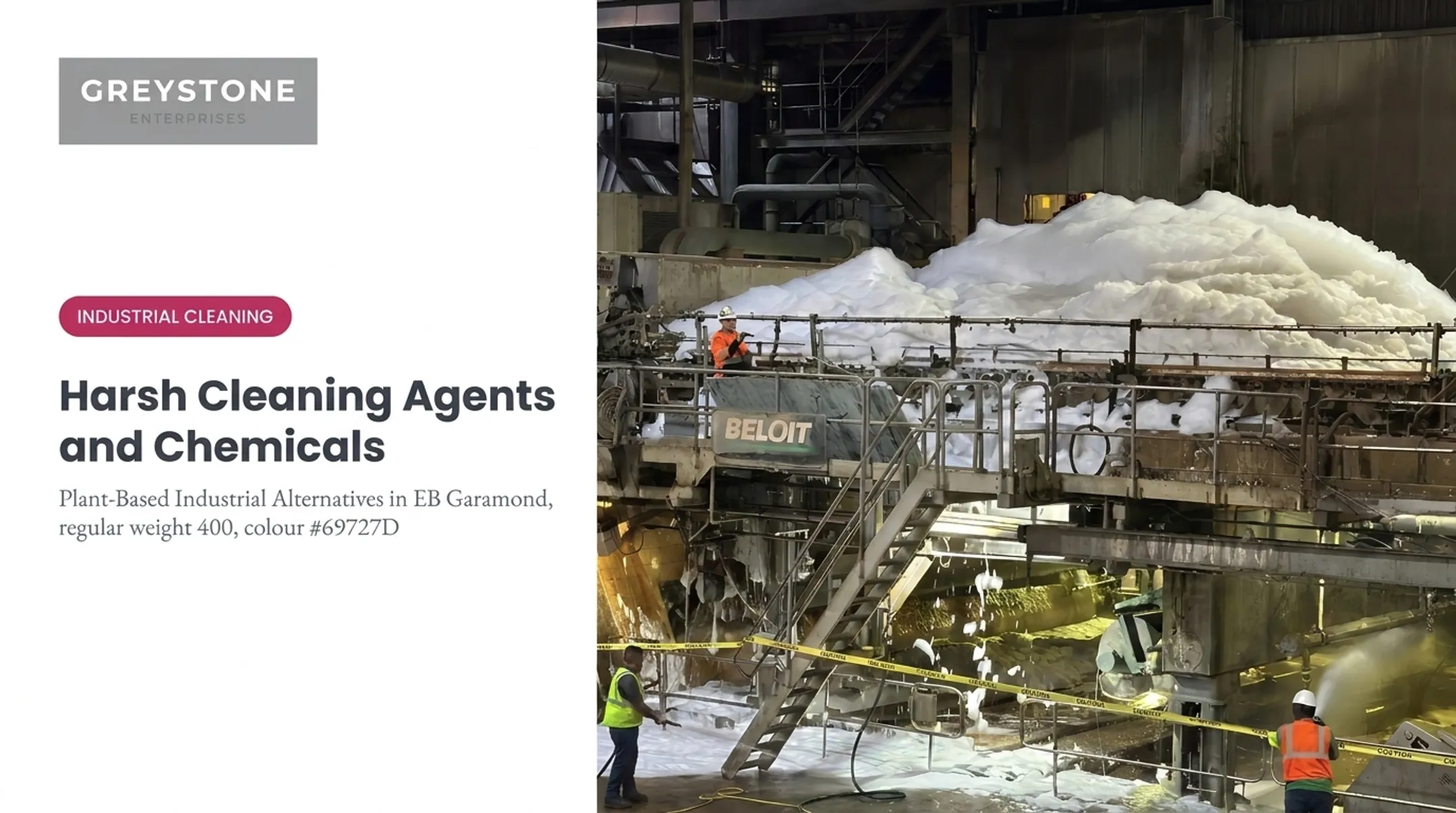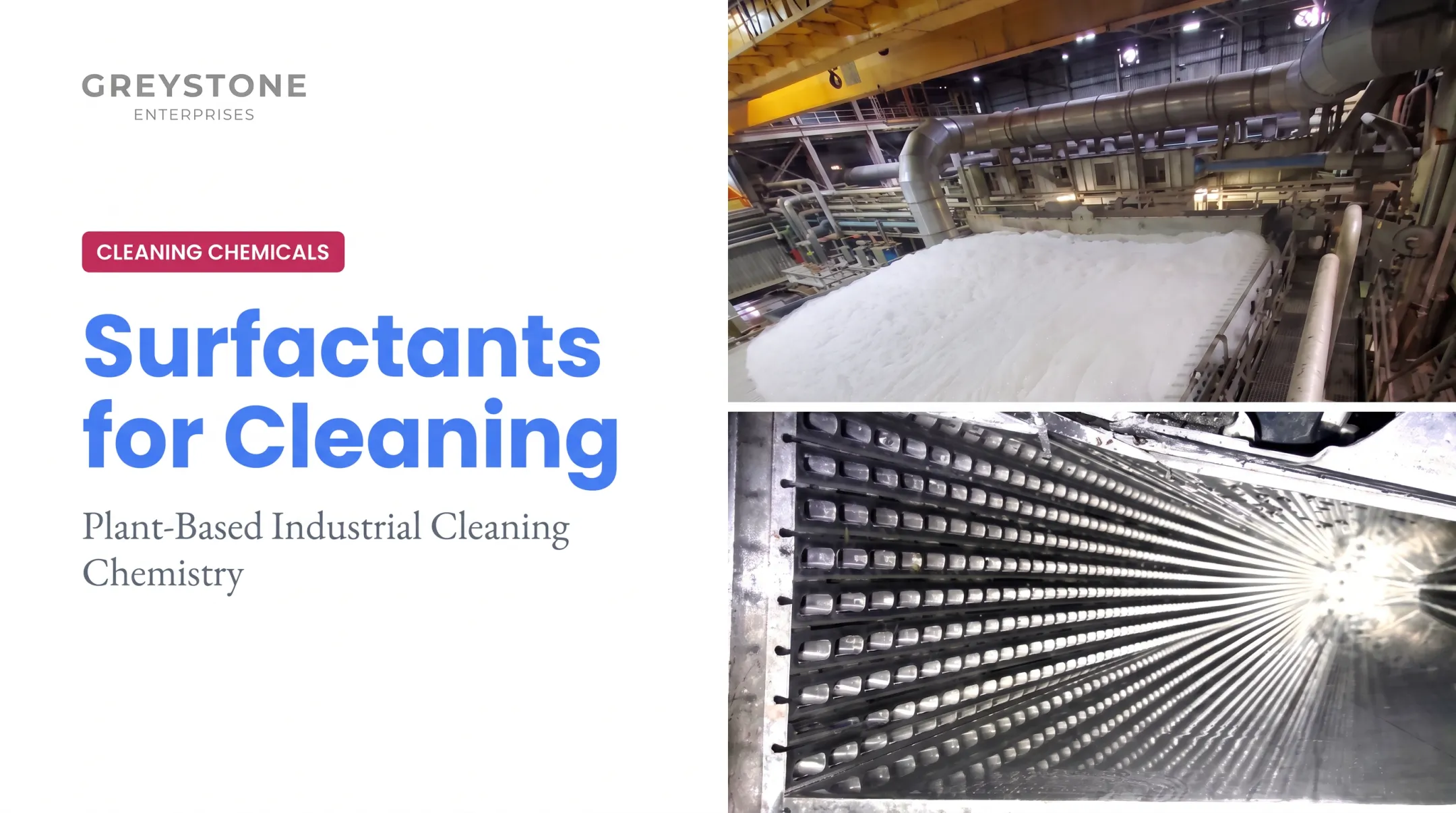

Effective cleaning means matching the agent to the soil, surface, equipment, and cleaning goal. This guide covers the main categories of cleaning agents, how to choose among them, how to handle them safely, and how tools and integrated systems fit into a program for U.S. facilities.
Key Takeaways
- No single cleaning agent suits every surface or task.
- Soil type, surface material, concentration, temperature, contact time, and mechanical action all shape the choice.
- Cleaning and disinfecting are separate steps unless the label supports combined use.
- Safe programs pair compatible chemistry with training, controlled dilution, and documented procedures.
What Are Cleaning Agents?
Cleaning agents are products that loosen, dissolve, suspend, or remove dirt, grease, mineral deposits, residues, stains, and microorganisms from surfaces.
You can sort them two ways:
- By chemical action: detergents, acids, alkalis, solvents, oxidizers, and abrasives.
- By purpose: degreasers, descalers, disinfectants, and floor cleaners.
Cleaning, Sanitizing, and Disinfecting
These are three different jobs. According to CDC guidance, soap or detergent cleaning removes soil and most harmful germs. Sanitizing reduces the germs that remain, and disinfecting kills those left after cleaning.
Under the FDA Food Code, sanitizing food-contact surfaces means a 5-log (99.999%) reduction of representative microorganisms on a cleaned surface. A disinfectant claim also requires EPA registration for legal sale in the U.S.
Order matters. Dirt blocks germ-killing chemicals, and organic matter can reduce or inactivate sanitizers. Remove visible soil first.
Types of Cleaning Agents
Water and Detergent-Based Cleaners
Water carries soil away and rinses. Detergents and surfactants help it wet surfaces, penetrate, and emulsify residues so they can be flushed off. Typical uses include general-purpose cleaning, equipment washdown, and routine facility maintenance. Food-contact use is acceptable only where the label permits it.
Greystone's Tri-Solve DG, for example, is a solvent-free general-purpose degreaser for light to moderate oil and grease soils.
Alkaline Cleaners and Degreasers
Alkaline products saponify and emulsify fats and oils. Highly alkaline cleaners dissolve proteins. You'll find them in food plants, kitchens, maintenance shops, and fleet wash bays.
Stronger alkalis demand more care:
- They attack aluminum.
- Concentration, temperature, and exposure time all change the outcome.
- They require PPE, thorough rinsing, and trained staff.
Acid Cleaners and Descalers
Acids target inorganic deposits: mineral scale, rust, oxidation, and hard-water buildup. They're common on tanks, fixtures, and process equipment. Mild organic acids handle light deposits, while strong acids can corrode metals.
One documented trap: hydrochloric-acid descaling can generate ferric chloride, which pits stainless steel. Test first, follow dilution directions, and never combine acids with other chemicals unless the manufacturer permits it.
Greystone's SolveTec PurClean SAC, a stabilized mineral acid, is safe on all surfaces except yellow metals. Users still need to account for substrate corrosion and neutralization.
Abrasive Cleaners
Powders, creams, pads, and blasting media remove stubborn soil by friction. Particle size and pressure determine how much they scratch. Even fine powders can mar stainless finishes, and polished metals, plastics, coatings, and painted equipment are also vulnerable. Use a non-abrasive alternative on those surfaces.
Solvents, Oxidizers, Enzymes, and Plant-Based Formulas
- Solvents dissolve oil-based residues, adhesives, and inks. Spent solvent cleaners need a hazardous-waste evaluation.
- Oxidizers such as hypochlorite and peroxides tackle stains and some organic residues.
- Enzymes (amylases, proteases, lipases) suit selected biological soils. A 2023 dairy review flags dosage, process control, and residual-activity limits.
- Plant-based products can support sustainability goals, but you still need to verify performance, compatibility, and disposal for your application. USDA BioPreferred verifies biobased content, not cleaning efficacy.
Disinfectants and Sanitizers
These products reduce microorganisms under defined label conditions. They don't replace soil removal. Check the label for contact time (surfaces must stay visibly wet for the full period), pre-cleaning requirements, rinse instructions, and food-contact limits. A cleaning claim is not a sanitizing claim.
How to Choose the Right Cleaning Agent
Identify the Soil
Start by sorting the soil:
- Organic: oils, fats, proteins, product residues.
- Inorganic: scale, rust, mineral deposits.
This prevents the classic mismatches, such as a general detergent on heavy grease or an acid on an acid-sensitive surface.
Evaluate the Surface
Check what the agent will touch: stainless steel, carbon steel, aluminum, plastics, rubber, glass, painted surfaces, coatings, concrete, flooring.
- Aluminum is readily attacked by acids and highly alkaline cleaners.
- Corrosive agents can stress-crack or cloud plastics.
- Some fatty-acid sanitizers degrade certain plastics and rubber.
Check manufacturer guidance and test an inconspicuous area.
Define the Outcome
Different jobs call for different products:
- Routine or deep cleaning
- Descaling and degreasing
- Allergen removal
- Sanitizing, disinfecting, or validated process cleaning
Some jobs need a coordinated sequence, such as detergent, rinse, then sanitizer.
Account for the Process
EHEDG describes four interacting factors: chemical action, mechanical action, time, and temperature. They compensate for one another only to a certain extent.
More concentration isn't the fix. It can leave residue, waste product, damage surfaces, and raise exposure. Temperature can backfire too: USDA FSIS warns that hot pre-rinse water can set protein soils, and live steam at the detergent step can bake on organic matter.

Check Documentation and Constraints
Pull the current label, SDS, and technical data sheet. Then ask:
- Which OSHA, EPA, FDA, USDA, or industry rules apply?
- Can wastewater go to the drain? EPA pretreatment rules restrict nondomestic discharges to publicly owned treatment works.
- Is ventilation adequate, and does the job involve confined spaces?
- Can rinse water and production windows support the process?
Validate and Monitor
Run a controlled trial using your actual soil, surface, water, and temperature before rolling out broadly. Track:
- Soil removal and residue
- Repeat-cleaning frequency and rinse quality
- Safety observations
- Water and chemical use
- Downtime and equipment condition
Be careful with shortcuts. CDC healthcare guidance calls visual inspection subjective, and ATP tests detect organic material, not pathogens.
FDA pharmaceutical guidance expects scientifically sound residue methods, and it has no universal detergent-residue limit. In February 2026, FDA's warning letter to Bio-Medical cited missing cleaning-validation studies, including validated contact times and concentration verification.
Safe Use, Storage, and Handling
Read Labels and Safety Documents First
Labels, Safety Data Sheets (SDSs), dilution directions, contact times, PPE requirements, and first-aid steps outrank informal recipes. OSHA's HazCom standard requires a written program and workplace SDSs. Keep an accessible chemical inventory and written procedures for routine use, spills, exposure, and emergencies.
Prevent Incompatible Mixing
Never mix products unless the manufacturer explicitly allows it. Washington's Department of Health identifies two classic hazards:
- Bleach plus ammonia produces chloramines.
- Bleach plus acids produces chlorine gas.
Accidental mixing can also create heat, pressure, or corrosive reactions. Follow current OSHA and product-safety guidance for incident response.
Control Exposure
Pick PPE for the specific hazard and task:
- Gloves rated for the chemical
- Eye and face protection
- Protective clothing
- Respirators where required
OSHA requires a PPE hazard assessment and training. Required respirators trigger a full respiratory protection program.
PPE doesn't replace ventilation, splash controls, equipment guarding, or safe procedures. For tanks, permit status under OSHA's confined-space standard depends on tank configuration and hazards. Not every tank needs a permit, but entry programs still need atmospheric testing and rescue provisions.
Dilute, Label, and Store Correctly
Over-concentrating raises cost, residue, surface damage, and exposure without better results. Use metering or dosing equipment where possible.
- Keep products in original or properly labeled containers.
- Separate incompatible chemicals.
- Secure storage against unauthorized access.
- Avoid unmarked secondary containers; OSHA's portable-container exemption covers only immediate use by the employee who transferred the chemical.

Build in Training, Inspection, and Disposal
Train by role: product selection, dilution, equipment use, spill response, first aid, and waste handling. Retrain when products or processes change. Close the loop with disposal, inspection, and documentation:
- Check discharge rules and permits for rinse water
- Evaluate spent solvents under RCRA
- Inspect equipment routinely
- Document incidents and corrective actions
Putting It All Together: Tools, Equipment, and Complete Industrial Cleaning Programs
Match Tools to the Chemistry
Match the tool to the chemistry and the soil:
- Manual options: brushes, pads, squeegees, wipes, and buckets
- Metered application: foamers, dosing systems, and spray applicators
- Higher impact: pressure washers, hot-water systems, steam, or automation when manual work can't deliver enough force or heat
Match nozzle pattern, flow, pressure, temperature, and coverage to the soil and surface. FSIS warns that high-pressure splash and fine aerosols can spread contamination. EPA identifies cycle time, nozzle size, and pressure as water-use variables in vehicle washes.
Industrial Applications and System Design
Common applications include:
- Plant-wide washdown across multiple cleaning points
- Tanks, vessels, and mixers between batches
- Food and beverage processing
- Paper-machine fabrics and felts
- Heavy equipment and fleet wash bays
Repeatable results come from documented SOPs and controlled systems. Clean-in-place circulates cleaning liquids through enclosed equipment without dismantling it, with turbulence and flow providing mechanical action. Parameters are process-specific, so treat any published example, such as a dairy milking-line wash, as context rather than a recipe.

Greystone's Integrated Approach
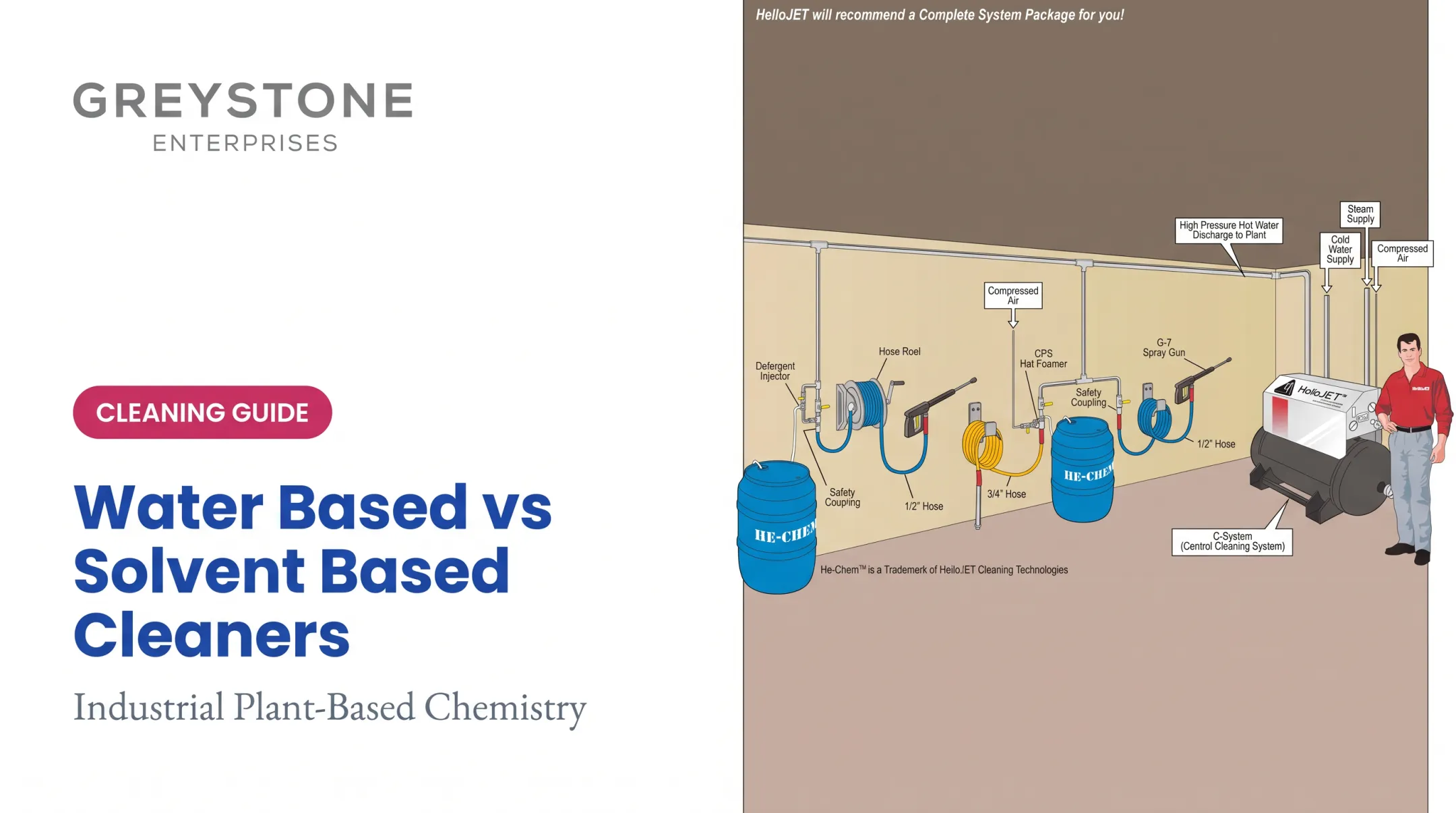
Greystone, parent company of Tri-Solve Chemicals and HelioJET, pairs Tri-Solve plant-based chemistries with HelioJET high-pressure hot-water and steam technology. HelioJET systems are offered as:
- Single-user wash stations
- Central cleaning systems
- Interior tank-washing systems
- Steam gun stations
The company builds facility-specific programs around safety, compliance, efficiency, sustainability, downtime, and equipment reliability. In paper mills, for example, its programs define a wash sequence and SOPs so chemistry, equipment, and procedure work as one system.
Final Thoughts for Facility Teams
The best program balances soil removal, surface protection, worker safety, regulatory duties, resource use, and uptime. Before changing products, review your chemistry, equipment, training, and validation process with qualified internal staff or an industrial cleaning specialist.
Frequently Asked Questions
What are household cleaning agents?
Common ones include detergents, dish soap, disinfectants, glass cleaners, descalers, abrasives, solvents, and plant-based products. Follow label directions and confirm the product suits the surface.
What are the cleaning tools and equipment?
They range from brushes, cloths, pads, buckets, and spray bottles to foamers, dosing systems, pressure washers, and hot-water or steam units. Industrial sites may add tank-washing or plant-wide systems.
What are the different types of cleaning agents?
Major categories are detergents, alkaline cleaners, acids, degreasers, abrasives, solvents, oxidizers, enzymes, disinfectants, sanitizers, and plant-based formulations.
What is the difference between cleaning and disinfecting?
Cleaning removes soil and contaminants. Disinfecting reduces microorganisms under specific label conditions. Cleaning usually comes first.
How do you choose the right cleaning agent?
Start with soil type and surface material, then weigh the required hygiene outcome, concentration, temperature, contact time, mechanical action, and safety needs. Confirm everything against the label and SDS.
How should cleaning agents be stored and handled?
Keep products in labeled containers, with SDSs accessible, and separate incompatible chemicals. Use correct dilution, PPE, and ventilation, train staff, and follow compliant spill and disposal procedures.