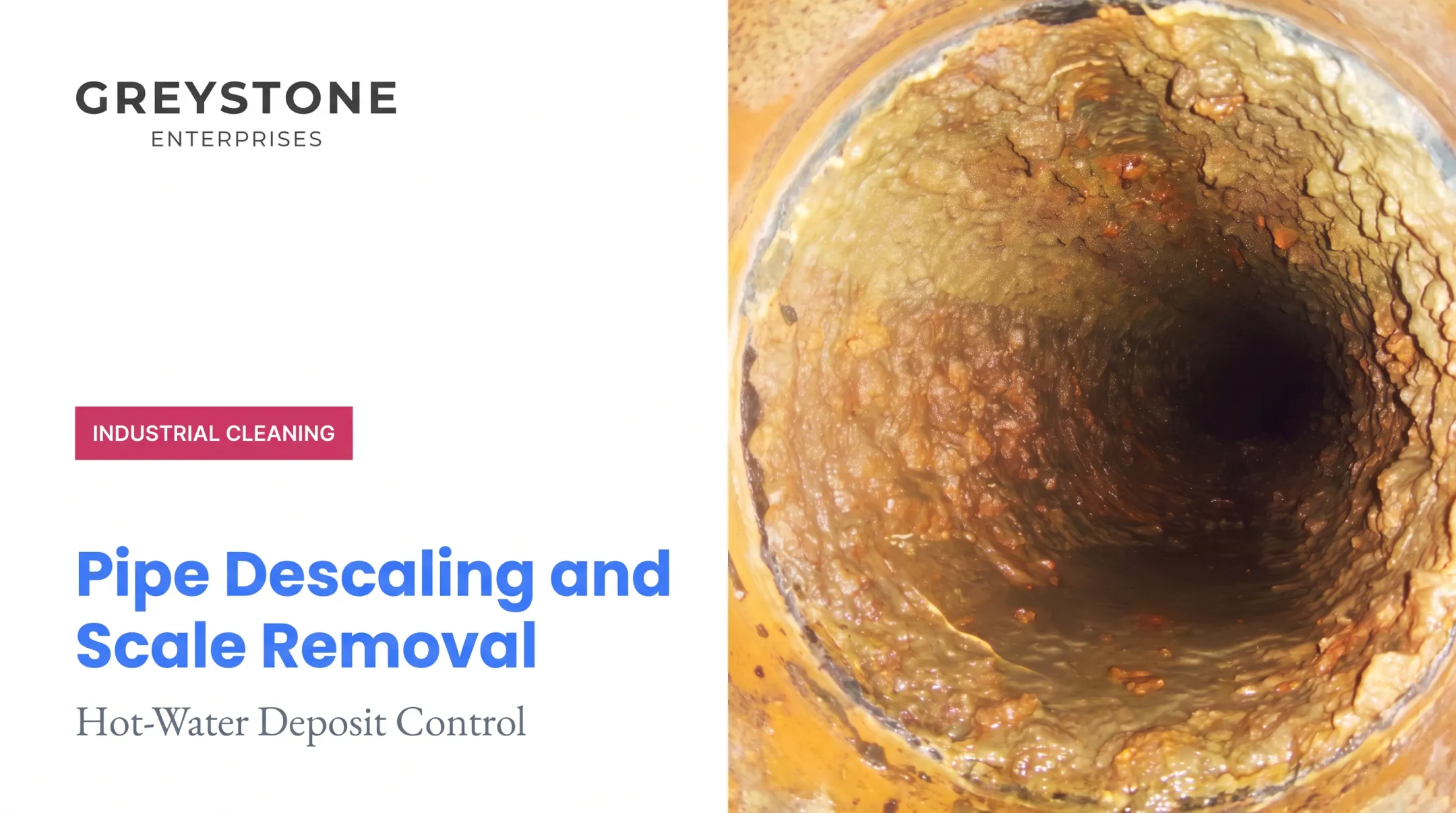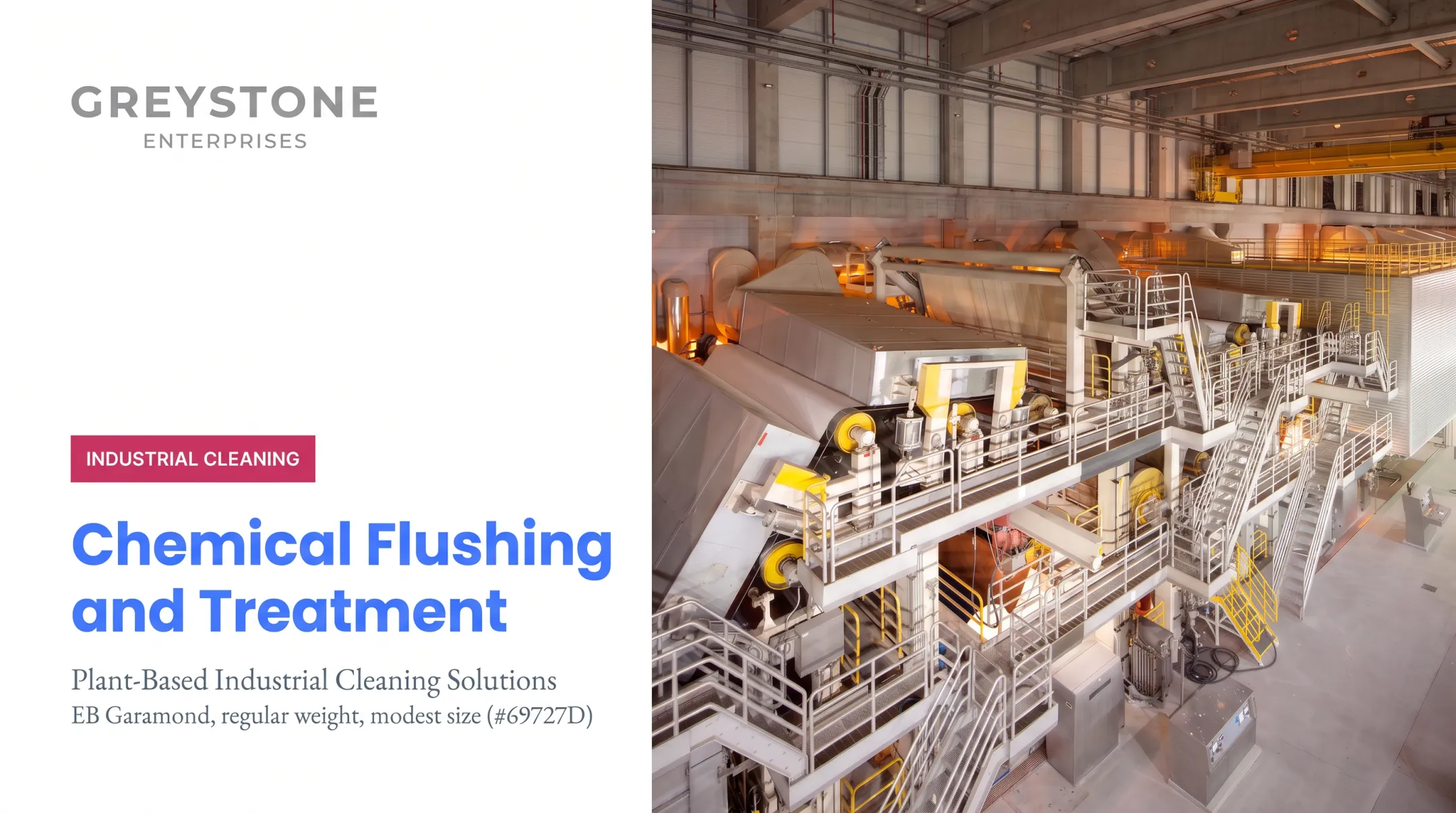

Light deposits on household fixtures often respond to careful DIY treatment. Thick or recurring deposits in plants can hurt equipment performance, sanitation, safety, and maintenance time.
This guide covers how to identify the deposit, match the method to the surface, follow a controlled cleaning process, and deal with the source of recurring scale.
Key Takeaways
- Mineral scale needs a compatible descaler or acid treatment, not just soap or bleach.
- Surface, deposit thickness, and equipment design decide the safest method.
- Test a hidden area, follow the label and SDS, wear PPE, and never mix acids with bleach.
- Recurring scale calls for water-quality review and, in plants, a customized deposit-control plan.
What Hard Water Deposits Are and Why They Build Up
Hard water carries dissolved calcium and magnesium. The USGS classifies water as soft (0-60 mg/L as CaCO3), moderately hard (61-120), hard (121-180), or very hard (over 180).
When water evaporates or heats up, those minerals stay behind as limescale, mainly calcium carbonate and magnesium carbonate. Not every visible stain has the same composition, though.
Know What You're Cleaning
Identify the residue before choosing a cleaner. The wrong treatment is ineffective at best and damaging at worst.
- Soap scum: forms when soap combines with calcium and magnesium, and is not the same as mineral scale.
- Rust, iron staining, biological growth, or grease: each needs different chemistry, and appearance alone is an unreliable guide.
- Glass haze: may be bonded residue or etching, not removable limescale.
Where Deposits Collect
Common collection points include:
- Faucets, aerators, showerheads, glass, tile, and grout
- Tanks, vessels, mixers, and process piping
- Washdown equipment and process machinery
In paper mills, stock system piping, headboxes, and machine showers are especially vulnerable. Deposits get harder to remove when they layer, dry out, or sit where heating and evaporation repeat, so catching them early saves real effort.
How to Remove Hard Water Deposits Safely
Follow a controlled sequence rather than reaching for the strongest acid.
- Identify the deposit and surface. Confirm the scale type and whether the substrate is stainless, glass, coated metal, or another finish before you choose chemistry.
- Review the label and SDS. OSHA's Hazard Communication Standard requires labels and SDSs, and employers must train workers to read them.
- Prep the area. Remove loose soil, ventilate, and restrict access.
- Apply the descaler. Cover the deposit fully and follow the manufacturer's dilution instructions. No universal ratio exists.
- Control dwell time. Don't let the solution dry on the surface.
- Agitate gently. Use a soft brush or non-abrasive pad once the scale softens. Skip steel wool, which scratches coatings, glass, and stainless steel.
- Rinse and dry. Rinse thoroughly, or neutralize if the label requires it. Inspect for remaining scale and note any damage.

Choosing the Chemistry
Use a mild, purpose-formulated descaler or diluted acidic cleaner. Factor in:
- Deposit thickness
- Surface material and equipment sensitivity
- Worker exposure
- Wastewater handling and downtime
Gel products help on tenacious spots because they extend contact time. They also need extra rinsing, since residue is more likely to remain than with liquids or foams.
Safety first: Test a small area, wear label-specified PPE, keep chemicals off skin and eyes, and never mix acids with bleach or chlorinated products. The Washington State Department of Health notes that bleach and acid mixed together release chlorine gas.
Industrial users have one more check. EPA's pretreatment guidance prohibits discharges below pH 5.0 to a publicly owned treatment works (POTW) unless it is specifically authorized to accept them. Verify your permit before sending spent descaler down a drain.
How to Choose a Removal Method for Different Surfaces
The right approach depends on material, finish, deposit severity, and whether the item can be removed and soaked.
Glass, Ceramic, Porcelain, and Tile
A compatible descaler loosens light-to-moderate mineral film. Follow with soft agitation, a full rinse, and drying to prevent new spots. Prolonged contact or abrasive scrubbing can damage grout and coatings. Long-standing haze may be etching, which no cleaner will reverse.
Faucets, Chrome, Stainless, and Specialty Finishes
Use short, controlled contact with a soft cloth or brush. Rinse completely and dry seams, aerators, and joints.
Brushed nickel, brass, bronze, plated, and coated finishes vary. Moen warns against harsh limescale removers on several finish families, and its finish-specific directions differ. Verify the label and test a hidden spot.
For stainless steel, the Nickel Institute cautions that hydrochloric acid can pit common grades.
Natural Stone, Concrete, and Acid-Sensitive Materials
Marble and other calcareous stone are mostly calcium carbonate, so acids like vinegar can dull or etch them. The Natural Stone Institute recommends neutral cleaner and thorough rinsing.
Concrete is also vulnerable to strong acids. For severe deposits or suspected etching, call a qualified restoration professional rather than increasing acid strength.
Showerheads, Piping, Tanks, and Enclosed Equipment
Removable parts can be soaked if the manufacturer permits. Enclosed systems may need circulation, controlled application, flushing, and documented chemical compatibility. Always follow the manufacturer's instructions.
A HelioPAC 1500, for example, calls for soaking the waterjet, mixing chamber, and diffuser in descaling solution and brushing with a small, soft brush.
DIY vs. Commercial Formulations
| Approach | Best for | Limits |
|---|---|---|
| Vinegar or citric acid | Light deposits on compatible surfaces | Weak on heavy scale; unsafe on stone and some finishes |
| Purpose-designed descaler | Moderate to heavy scale | Needs compatibility check, PPE, rinsing |
| Hot water, pressure, or professional process | Thick or equipment-level deposits | Requires planning and trained operators |
How to Prevent Hard Water Deposits From Returning
Separate routine control from corrective cleaning.
- Wipe or squeegee water-contact surfaces and remove standing water.
- Clean spills promptly.
- Inspect high-risk areas on a schedule.
Control the Source
Evaluate incoming water quality. EPA notes that cation-exchange softeners remove dissolved calcium and magnesium, while conventional filtration does not.
Check whether process temperatures or evaporation points concentrate minerals, and follow equipment maintenance schedules. Heating drives scale in water heaters, and DOE estimates that boiler scale just 1/16 inch thick can raise fuel use about 3.9%.

Equipment makers often give the same guidance. Greystone advises supplying a HelioJET with soft water if the plant has a hardness problem, to prevent fouling.
Track Recurrence
Log location, deposit appearance, cleaning method, contact time, and time to reappearance. The pattern shows whether you have a housekeeping, water-quality, process, or equipment-design problem.
Once you know the driver, balance cleaning effectiveness against water use, chemical consumption, energy, worker safety, wastewater requirements, and uptime.
When Hard Water Deposit Removal Requires an Industrial Cleaning Plan
Household methods stop working when deposits:
- cover production assets
- recur quickly or restrict flow
- interfere with sanitation
- demand repeated manual scrubbing
- cause unacceptable downtime or worker exposure
How Professionals Assess the Job
- Identify the deposit through visual inspection, process history, water-quality information, and lab analysis when needed.
- Map affected assets: tanks, vessels, mixers, piping, paper-machine components, washdown drops, wash bays, and hard-to-reach surfaces.
- Confirm constraints: material compatibility, production limits, sanitation requirements, wastewater controls, PPE, ventilation, isolation, and rinse verification.
Cleaning Forces Work Together
No single force wins everywhere.
- Chemistry dissolves or loosens scale when compatible with the deposit and substrate.
- High-pressure hot water or steam can improve soil removal and cut manual effort in suitable applications.
- Agitation, circulation, spray devices, or interior tank-washing systems improve coverage in enclosed or complex equipment.
Tetra Pak's dairy handbook describes acid circulation for encrusted salts and lists temperature, time, chemistry, and mechanical action as the cleaning variables. It also stresses that exact concentrations depend on fouling severity.
A TAPPI report on kraft pulp mills shows the stakes: at one mill, 20,000-psi hydroblasting for 12 hours failed against severe calcium carbonate scale before acid was used.
Where Greystone Fits
Greystone's team develops facility-specific cleaning strategies that combine HelioJET high-pressure hot-water and steam technology (up to 350 PSI and 180°F) with matched Tri-Solve plant-based chemistries where appropriate. Compatibility, safety, and process validation come first.

For paper machines, the Bubble-Up foam process targets tenacious mineral scale in approach piping and headboxes, using less chemical and time than traditional boilouts.
A good plan defines success up front:
- restored access or flow
- removal confirmation
- sanitation verification where applicable
- fewer repeat cleanings
- lower resource use
- better equipment reliability
If your plant faces recurring or stubborn deposits, start with an assessment. Greystone offers a "Talk to an Expert" consultation for customized planning, not a one-size-fits-all treatment.
Frequently Asked Questions
Which is the best hard water stain remover?
It depends on the deposit, surface, severity, and safety needs. Light facility deposits may yield to mild chemistry. Heavy industrial scale calls for a compatible, purpose-formulated descaler.
What do professionals use to remove hard water stains?
They use compatible descaling chemistry with controlled dwell time, agitation, and sometimes hot water or pressure, plus PPE, rinsing, and surface testing. Methods are chosen per asset and deposit, not by one universal product.
How do you remove thick calcium deposits?
Soften or dissolve them with a compatible treatment, agitate gently, and rinse thoroughly. Escalate to professional assessment when deposits affect equipment, sit in inaccessible areas, or touch sensitive materials.
Can vinegar remove hard water deposits?
It may help on light deposits on compatible surfaces. It is often ineffective on heavy scale and unsafe for natural stone and some finishes. Never mix it with bleach or other incompatible chemicals.
How do you remove hard water deposits without damaging surfaces?
Identify the surface, read the label and SDS, and test a hidden area. Use the least aggressive effective method, control contact time, use non-abrasive tools, and rinse completely.
How can facilities prevent hard water deposits from returning?
Dry and clean surfaces routinely, evaluate water quality or softening, and inspect heat and evaporation points. Schedule descaling, and adopt a documented deposit-control plan for recurring problems.