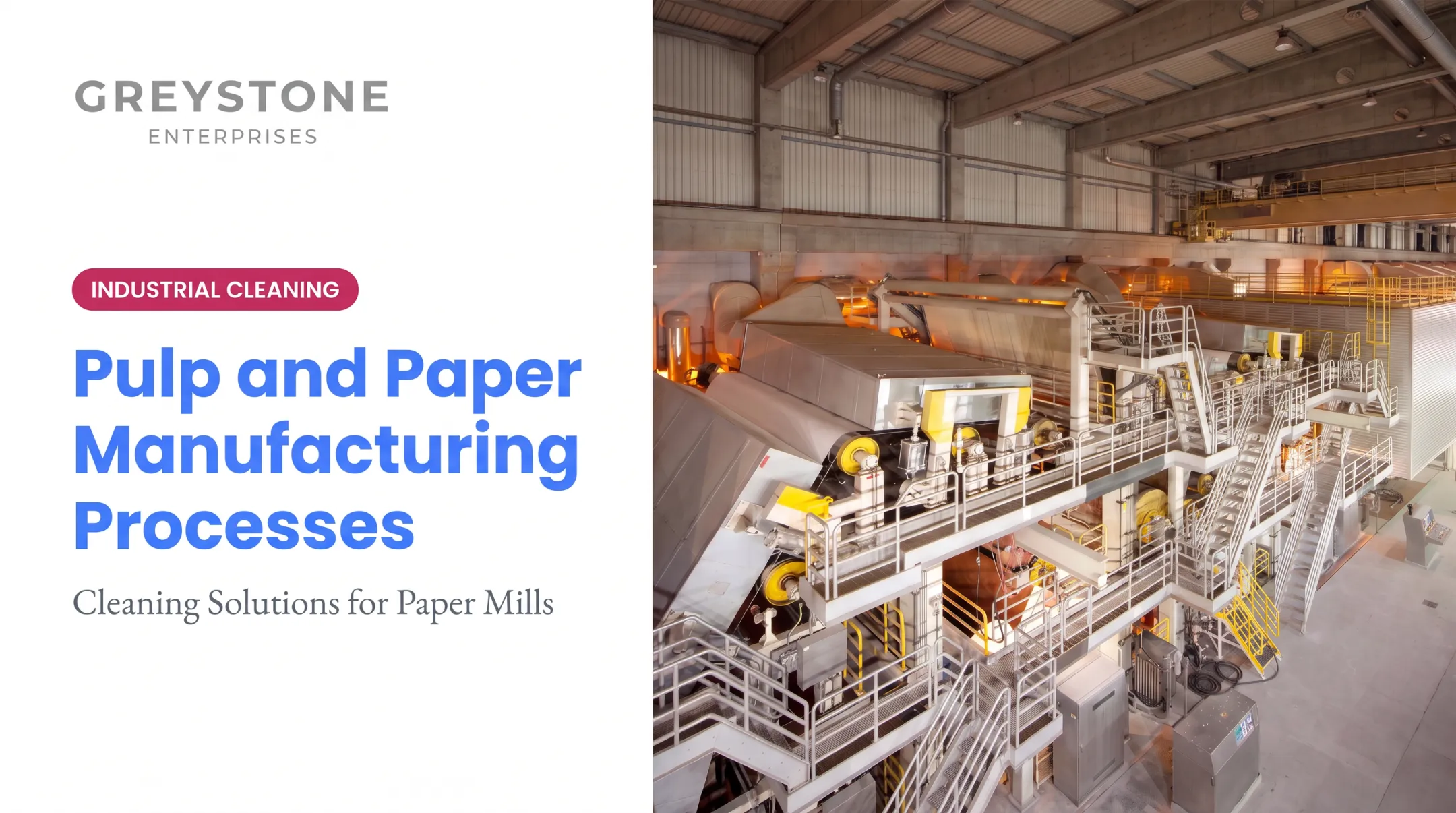

This guide is for people working in or learning about U.S. pulp and paper mills. Understanding the sequence matters for product quality, worker safety, environmental compliance, equipment reliability, and production performance. Yet the process is often referenced and rarely understood at an operational level.
U.S. mills produced 66.3 million tons of paper and paperboard in 2025. Below, we cover the stages, process controls, applications, and limitations that keep that output on spec.
Key Takeaways
- Papermaking is one connected chain, from raw-material prep through finishing.
- Chemical, mechanical, and recycled pulping give different fibers and operating demands.
- Quality depends on furnish, consistency, drainage, moisture, additives, and machine condition.
- Safety, recovery, wastewater, deposit control, and maintenance drive mill reliability.
What Is the Pulp and Paper Manufacturing Process and Why Is It Used?
What Is the Pulp and Paper Manufacturing Process?
The pulp and paper manufacturing process converts cellulose-containing raw materials into separated fibers, a controlled pulp suspension, and a continuous dried paper web. EPA describes pulp as a mixture of cellulose fibers and water.
In simple terms, a mill separates and prepares fibers, distributes them evenly, removes water, bonds the fibers, and finishes the sheet to a specification.
Three terms are easy to mix up:
- Pulping: separates and prepares fibers.
- Papermaking: forms, presses, and dries the sheet.
- Converting: cuts, coats, folds, or prints finished paper into customer products.
Why Is the Process Used in Pulp and Paper Mills?
Mills use it to make consistent grades. AF&PA reported 2025 production of 36.1 million tons of containerboard, 12.4 million tons of boxboard, and 7.8 million tons of tissue. Mills also used 31.4 million tons of recycled paper that year, per AF&PA recycling data.
Each grade has to hit targets for:
- Strength, brightness, opacity, and absorbency
- Surface smoothness and basis weight
- Moisture and formation
- Machine runnability
Without control, you get inconsistent fibers, poor formation, deposits, excessive breaks, off-spec product, higher resource use, and avoidable downtime.
Some requirements come from regulation. Key rules include:
- EPA effluent guidelines in 40 CFR Part 430, applied through discharge permits
- Air rules such as NESHAP Subparts S and MM for pulping and chemical-recovery sources
- OSHA 29 CFR 1910.261 for mill safety, plus lockout/tagout (1910.147), permit-required confined spaces (1910.146), and machine guarding (1910.212)
Grade specs and customer expectations drive the rest.
How the Pulp and Paper Manufacturing Process Works
The flow runs from incoming wood or recovered paper through fiber preparation, pulping, screening and cleaning, optional bleaching, stock preparation, forming, pressing, drying, coating or sizing, finishing, and shipment. Chemical recovery and wastewater treatment run alongside the main line.

Step 1: Prepare the Raw Material
Wood mills debark and chip logs, then screen chips. Oversized chips go back to the rechipper, fines often become hog fuel, and acceptable chips are stored and conveyed to pulping.
Recovered paper skips the chipper but brings its own challenges: sorting, contaminant removal, and stickies. Screens catch macro-stickies, while microstickies can pass through.
Virgin and recycled feedstocks differ in:
- Fiber history and condition
- Contamination load
- Moisture and furnish consistency
- Screening and cleaning requirements
Step 2: Separate and Prepare the Fibers
Kraft chemical pulping cooks chips in white liquor (sodium hydroxide and sodium sulfide) under heat and pressure. That dissolves the lignin binding the fibers. Washed pulp is separated from spent black liquor, which is concentrated and burned in a recovery furnace. Green liquor is causticized with lime to regenerate white liquor, and a lime kiln regenerates quicklime.
Mechanical pulping (stone groundwood, refiner, TMP, CTMP) separates fibers by force. Lignin stays, so yields run high (DOE cites 85% to 96%), but electricity use is high and strength is lower. Newsprint and magazines are typical uses.
Recycled-fiber repulping redisperses used paper in water with agitation, then screens, cleans, and where needed deinks.
After pulping, mills wash, screen, and clean the stock. Oxygen delignification and bleaching follow when a grade needs it. DOE describes ECF bleaching, which can still use chlorine dioxide, and TCF as an alternative. Then come refining and additive preparation. Check EPA and DOE documents for current chemical names and regulatory terms.
Step 3: Form, Dry, and Finish the Paper
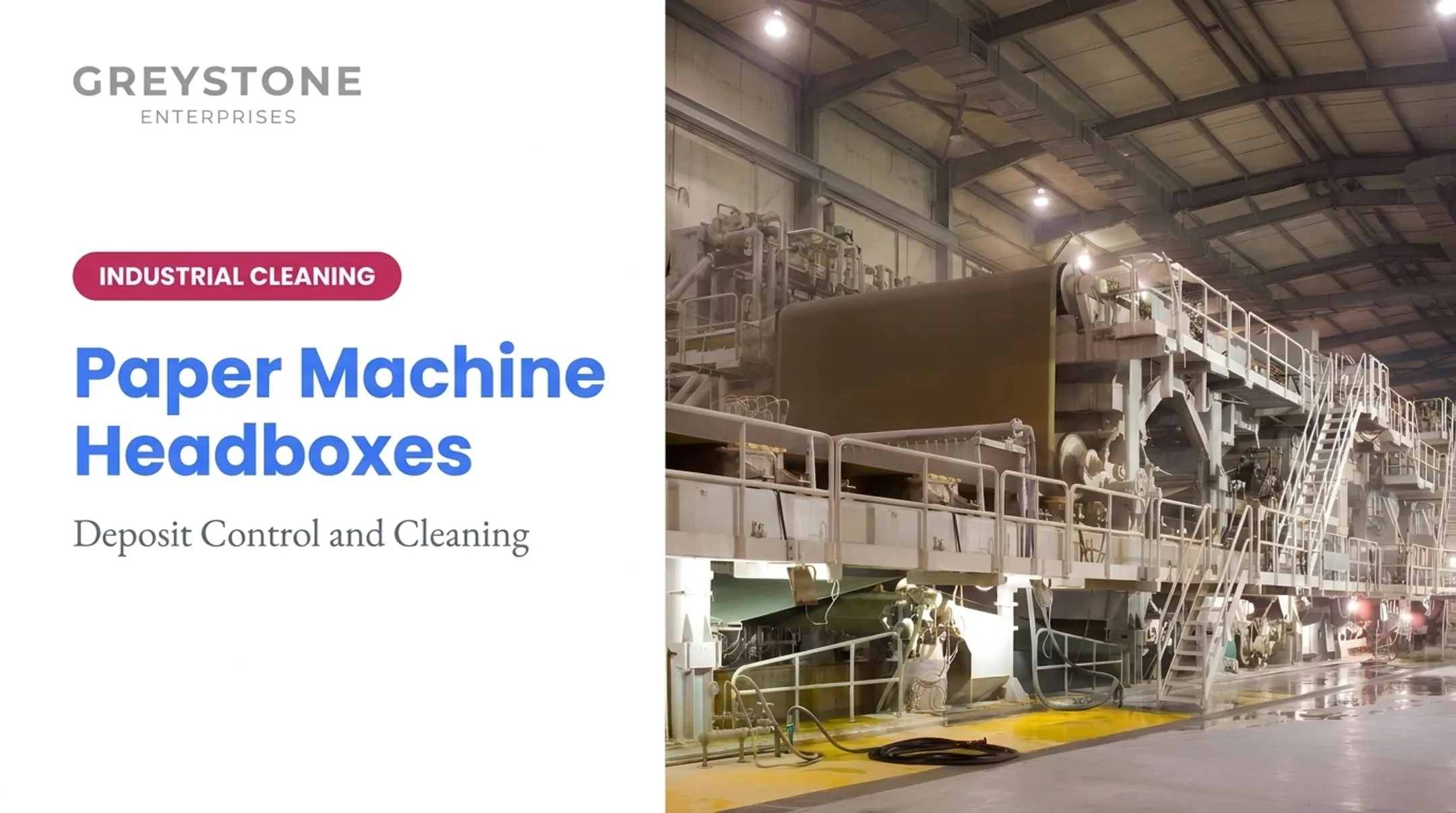
Stock is diluted and pumped through the approach system and headbox onto a moving forming fabric. Typical headbox consistency runs about 0.5% to 1%, lower for tissue and higher for heavy board. Those are examples, not setpoints.
Pressing removes more water and builds density. A DOE-hosted assessment reports roughly 40% solids after a tri-nip press and 45% to 50% after a shoe press. Heated dryer cylinders do the rest.
Finishing covers coating, sizing, calendering, winding, slitting, cutting, packaging, and final checks. Common TAPPI tests include basis weight (T 410), caliper (T 411), moisture (T 412), and brightness (T 452). Use the current TAPPI edition when specifying a method.
Key control points across the flow:
- Furnish composition and pulp consistency
- Refining energy, pH, temperature, and pressure
- Drainage and chemical dosage
- Dryer conditions and moisture profile
- Online and laboratory quality testing
Where the Pulp and Paper Manufacturing Process Is Applied and What Affects It
Where Is the Process Applied?
The process spans several mill areas:
- Wood yard or recovered-fiber preparation
- Digesters or mechanical refiners, washers, screens, and cleaners
- Bleaching and stock-preparation systems
- Paper machines with presses and dryers
- Coaters, calenders, winders, and converting lines
It runs continuously in normal production. It also matters during grade changes, start-up and shutdown, quality investigations, and planned outages.
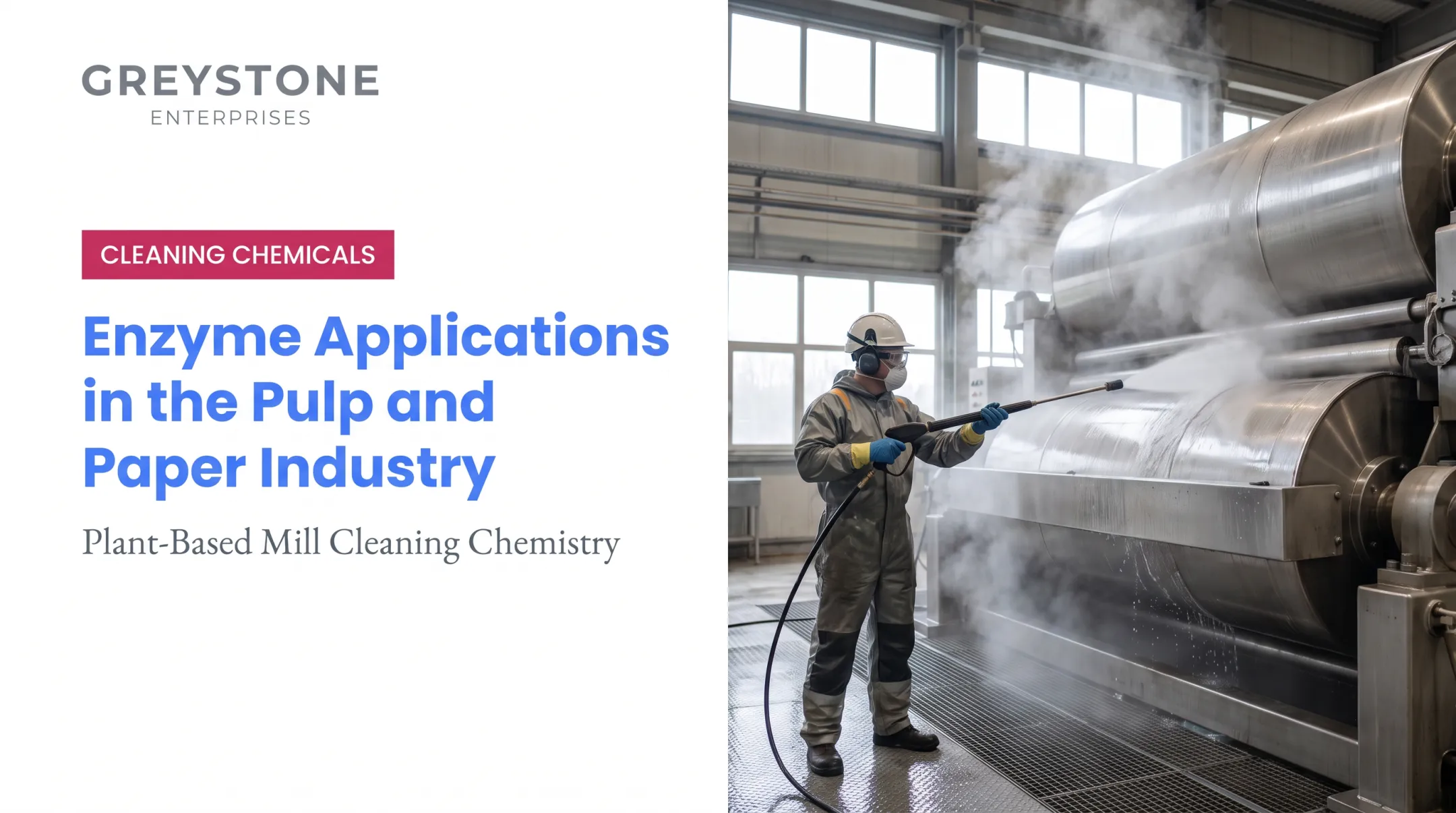
On the machine, Greystone supports mills with plant-based cleaning and conditioning chemistries and deposit-control programs for wires, press felts, and dryer fabrics. These apply when deposits cut permeability and drainage and hurt runnability. Cleaning supports process control. It does not replace it.
In one corrugating medium case, dirty dryer fabrics caused moisture-profile problems, higher steam use, and slower speeds. A HelioJET press-fabric program extended fabric life from 28 to 35 days, a 25% gain. The case study reports savings above $500,000 per year across two machines.

What Factors Affect the Process?
Raw material and furnish. DOE notes softwood fibers add strength, while hardwood improves formation, smoothness, and printability. Lignin content, moisture, additives, and blends all change pulp behavior. Recycled fiber adds contamination such as ink, latex, and adhesives.
Operating and equipment condition. Temperature, pressure, chemical concentration, residence time, consistency, refining intensity, drainage, dryer balance, and machine speed all matter. So do fabric condition and deposits. A review of stickies describes deposits on fabrics, felts, and rolls. Tackier dryer cans also raise break risk.
Safety and regulation. Hazards include chemical handling, hot liquor and surfaces, rotating and nip-point equipment, confined spaces, and energy isolation. Hazard Communication (1910.1200) covers labels, safety data sheets, and training. Emissions, wastewater, chemical recovery, and waste handling all require documentation. Check current EPA and OSHA text, since proposals such as the 2026 Boiler MACT amendments are not final rules.
Common Issues, Misconceptions, and When the Process May Not Be Appropriate
Common Issues and Misconceptions
Not all paper starts with the same pulp. Furnish varies by grade. One mill profile lists:
- Corrugating medium: 63% NSSC and 37% recycled fiber
- Coated freesheet: mostly kraft hardwood and softwood with 10% recycled
- Newsprint: about two-thirds TMP and one-third recycled newsprint
A bright sheet isn't proof of an efficient process. Appearance says little about fiber strength, formation, drainage, moisture control, deposits, chemical and water use, or runnability.
Other oversimplifications:
- Treating pulping as the whole process
- Assuming every grade is bleached (EPA's rules name an Unbleached Kraft Subcategory)
- Treating cleaning and maintenance as separate from production performance
Deposits show why cleaning ties directly to runnability. Pitch, tar, sizing residue, latex, stickies, hot melts, and ink cut felt permeability and raise rejects, downtime, and sheet breaks.

Scale is another problem. Calcite, barite, and calcium oxalate are common in bleach plants.
When the Process or a Process Step May Not Be Appropriate
No pulping route, bleaching sequence, additive, cleaning method, or machine setting should be chosen by default. Grade, furnish, equipment design, environmental requirements, and measured operating condition may call for something else. Evaluate by condition:
- A Bubble-Up foam clean may suit approach piping when a full-system boilout isn't practical
- Fixed-flow conditioning units need matched flows when showers are added
Involve qualified mill, safety, environmental, and equipment specialists before changing a step.
Conclusion
Pulp and paper manufacturing is an integrated sequence: separate and prepare cellulose fibers, form a wet web, remove water, and finish the sheet to a defined specification.
Several factors interact throughout the mill:
- Fiber preparation
- Process controls
- Equipment condition
- Safety
- Environmental management
- Targeted maintenance
Mills that understand those links improve consistency and base decisions on how the full process behaves.
Frequently Asked Questions
What is pulp in paper manufacturing?
Pulp is a suspension or mass of separated cellulose fibers in water. It is prepared from wood, recycled paper, or other plant feedstocks for papermaking.
What are the main steps in the pulp and paper manufacturing process?
Mills prepare raw material, pulp it, then screen and clean. Optional bleaching and stock preparation follow, then sheet formation, pressing, drying, and finishing.
What is the difference between chemical and mechanical pulping?
Chemical pulping uses chemicals to dissolve much of the lignin. Mechanical pulping separates fibers by force, keeping lignin, which raises yield but lowers strength.
How is recycled paper used to make new paper?
Used paper is repulped, screened, cleaned, and sometimes deinked. The fiber is treated, blended into the furnish, and formed into a new web.
Why is bleaching used in paper manufacturing?
Bleaching removes residual color and lignin-related discoloration when a grade needs higher brightness. Not every product uses the same sequence, and some are unbleached.
What equipment is used in a paper mill?
Major groups include chippers, digesters, refiners, washers, screens, and cleaners. Mills also run bleaching and stock-prep systems, paper machines, presses, dryers, coaters, calenders, winders, and recovery and wastewater systems.