
The cleaner you pick affects far more than cleaning results. It changes ventilation and PPE needs, wastewater handling, drying time, corrosion risk, regulatory obligations, labor, and downtime. The US industrial cleaning solvents market alone was estimated at $358.4 million in 2024, so plenty of facilities are making this call.
This article compares water-based and solvent-based cleaners by chemistry, soil type, surface compatibility, application method, safety, and total cost. It closes with a real case study and answers to common questions.
Key Takeaways
- Water-based cleaners carry surfactants and other additives in water; solvent-based cleaners dissolve heavy organic soils.
- Solvents add ventilation, flammability, VOC, and disposal considerations.
- Neither wins by default. Match chemistry to soil, surface, method, and facility controls.
- Hybrid or solvent-emulsion cleaners suit mixed organic and inorganic soils.
- Test on your actual soils and surfaces before scaling up.
Water-Based vs. Solvent-Based Cleaners: Quick Comparison
| Factor | Water-based | Solvent-based |
|---|---|---|
| Composition | Water plus surfactants, builders, chelating agents, pH modifiers, corrosion inhibitors | Petroleum distillates, alcohols, glycol ethers, or terpenes; formula sets the hazard |
| Soil removal | Particulates, water-soluble soils, light-to-moderate oils; alkaline products handle many organic soils, acids handle scale and rust | Heavy oils, grease, adhesives, waxes, hydrocarbon deposits |
| Drying and corrosion | Rinse and dry may be needed; water can corrode some metals | Fast evaporation, little moisture; crevices can still rust if not dried |
| Safety | Not hazard-free; check the SDS | Many non-halogenated solvents are flammable or combustible |
| Cost | Dilution, heating, rinsing, wastewater | Ventilation, PPE, waste disposal |
Cost
Container price alone misleads. Factor in the full process cost:
- Dilution and chemical consumption
- Heating, labor, and rinsing
- Wastewater treatment and disposal
- Ventilation, PPE, and equipment changes
- Rework and downtime
The cheaper option depends on the whole process and the concentration the product needs.
Safety and environment
Don't assume every product in a category carries the same risk. Water-based doesn't mean hazard-free, and solvent-based doesn't always mean unsuitable. The SDS, label, concentration, and application environment determine the real controls.
Process fit
Solvent evaporation helps when you need rapid drying. Water-based cleaning fits:
- Hot-water and pressure-wash systems
- Spray and immersion processes
- Plant-wide washdown setups
Foam control, temperature, and pressure matter for results too.
What Are Water-Based and Solvent-Based Cleaners?
What Are Water-Based Cleaners?
Water is the primary carrier, and additives do the heavy lifting: surfactants, builders, chelating agents, pH modifiers, and corrosion inhibitors. "Water-based" does not mean the product is just water.
Benefits:
- Lower VOC emissions and flammability potential
- Easy integration with aqueous cleaning systems
- Good for routine and mixed-soil cleaning
Limitations:
- Rinsing and drying requirements
- Moisture and corrosion risk
- Hard-water effects and wastewater management
Typical uses include:
- Food and beverage CIP, where alkaline chemistry handles organic soil and acids handle mineral deposits
- Tanks, machinery, and vehicle washing with water-diluted alkaline cleaners
- Metal parts cleaning, including aqueous alkaline spray lines that replace vapor degreasers (TURI case study)
- Paper-mill equipment and heavy-equipment wash bays
What Are Solvent-Based Cleaners?
In these formulations, a solvent does much of the dissolving. Families include mineral spirits and other petroleum distillates, alcohols, glycol ethers, and terpenes such as d-limonene. Properties vary widely, so check the SDS for ingredients, VOC content, flash point, and required controls.
Where they excel:
- Heavy oils, grease, adhesives, waxes, resins, and coatings
- Jobs that need fast evaporation or minimal moisture
Where they fall short:
- Inorganic or water-soluble soils
- Sensitive plastics, painted surfaces, seals, and gaskets
Common uses include targeted degreasing, maintenance cleaning, and adhesive or coating residue removal. For mixed organic and inorganic soils, a hybrid or solvent-emulsion cleaner is often the better fit.

Water-Based vs. Solvent-Based: What Is Better for Your Operation?
Work through these steps in order.
- Start with the soil. Is it water-soluble, particulate, oily, hydrocarbon-based, adhesive, baked-on, inorganic, or a mix? Let a soil analysis drive the choice, not a broad product label.
- Check the surface. Confirm compatibility with stainless, aluminum, ferrous metals, coatings, plastics, rubber, seals, and gaskets. Strong caustics can attack aluminum, brass, and copper. Spot-test before production use.
- Match the application method. Spray, foam, pressure washing, immersion, ultrasonic, manual wipe, tank cleaning, and washdown all differ in temperature, dwell time, rinsing, and wastewater needs.
- Review safety and compliance. OSHA hazard communication requires labels, SDS access, and training. Flammable liquids fall under 29 CFR 1910.106. Regional VOC limits (such as South Coast AQMD's 25 g/L) and RCRA ignitability rules for liquid waste below 140°F flash point also apply.
- Calculate total cost. Include chemical use, water and energy, labor, equipment, drying time, rework, corrosion, disposal, and downtime.

Situational recommendations
- Choose water-based when the process supports aqueous cleaning and you want routine washdown, lower VOC or flammability concerns, broad soil removal, or hot-water and pressure-cleaning integration.
- Consider solvent-based when heavy organic residues, rapid evaporation, limited moisture, or targeted degreasing are critical and your facility can support the controls.
- Consider hybrid for heavy oil mixed with dirt, sand, or other inorganic material.
A facility-specific model
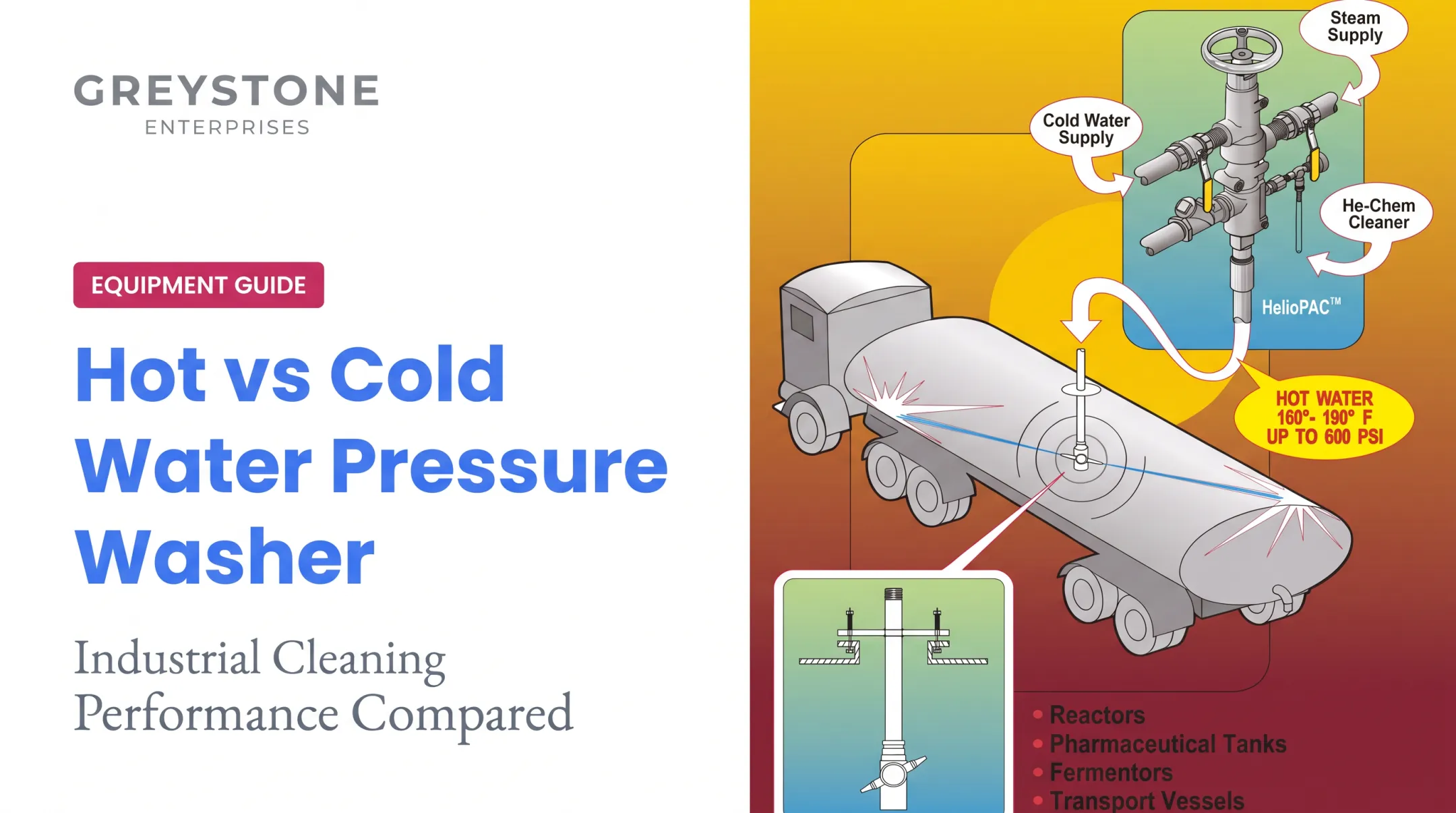
Greystone shows what a customized approach looks like. It pairs Tri-Solve plant-based chemistries with HelioJET high-pressure hot-water and steam technology, which combines 100 PSI steam with water to deliver up to 350 PSI and 180°F water.
No single chemistry fits every job. Tri-Solve's range includes non-solvented degreasers for light-to-moderate soils and solvented products for heavier organics, chosen by soil, substrate, and application method.
Validate before you scale
Test representative soils and substrates. Measure cleaning quality and cycle time. Inspect for corrosion or surface damage. Confirm worker and environmental controls. Then compare total operating cost before a plant-wide change.
Real-World Examples and Case Studies
Coated freesheet papermill dryer fabrics
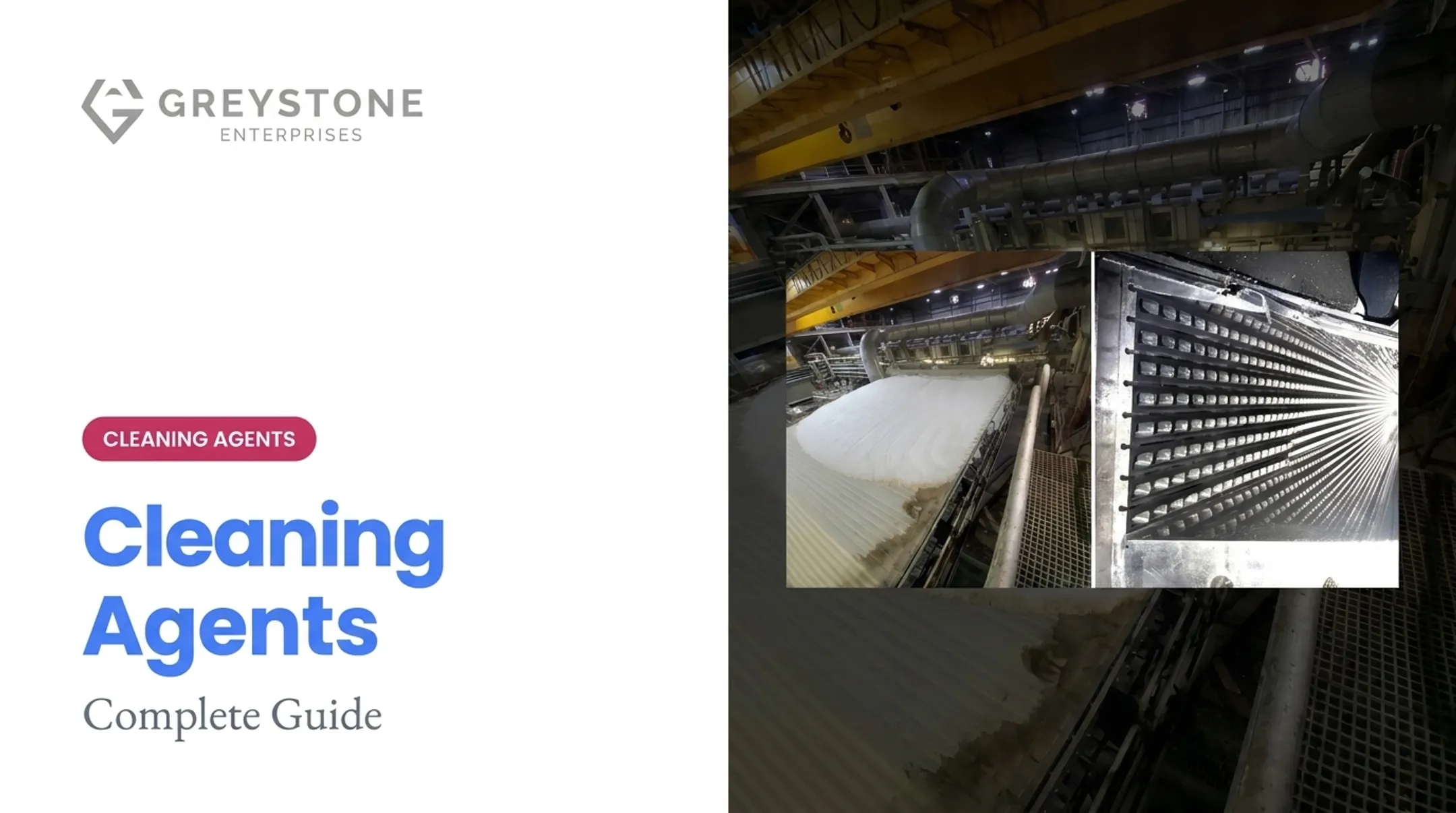
A coated freesheet papermill faced after-coater contamination on its dryer fabrics. Greystone's HelioJET case study documents a mechanical, operational, and chemical approach: HelioJET water conditioning, mechanical cleaning, operational controls, and a neutral degreaser.
The application was safe and easy to manage on the production floor.
Measured results:
- Cleaning-cycle time dropped 37%, with the sequence finishing in 22 minutes
- Chemical usage fell 75% versus the previous method
- Foam rinsed out in 10 minutes, leaving fabrics described as "virtually spotless"

Qualitative observations included:
- Fewer quality rejects and customer complaints
- Fewer sheet breaks
- Improved moisture profiles
After success in the 5th and 6th dryer sections, the mill added two showers to the 4th section and cleaned the entire after-coater dryer with one HelioJET water-conditioning unit. The program also supported quick washes during sheet breaks and full cleaning during longer shutdowns.
Takeaway: Results came from matching a neutral chemistry to the soil, delivering it with hot-water technology, and fitting the routine to the mill's production schedule. Other sites will have different soils and constraints.
Want to talk through your own soil, surface, cleaning method, and facility objectives? Contact Greystone.
Conclusion
Water-based cleaners suit many aqueous, routine, lower-VOC, or plant-wide jobs. Solvent-based cleaners remain useful for heavy organic residues, rapid drying, or moisture-sensitive processes. Hybrids can bridge mixed soils.
Weigh these factors together:
- Cleaning performance
- Worker safety
- Surface compatibility
- Environmental controls
- Total cost
- Downtime
Then validate the choice under real facility conditions before scaling.
Frequently Asked Questions
What are water-based cleaners?
They use water as the primary carrier or solvent. Surfactants, detergents, builders, or other additives provide the added cleaning action.
What are examples of water-based cleaners?
Aqueous degreasers, detergents, alkaline cleaners, acidic cleaners, all-purpose cleaners, and products made for pressure washing, spray, immersion, or plant washdown. The label and SDS determine classification.
Is Windex a water-based cleaner?
Windex Original lists water as its liquid base, with ethylene glycol n-hexyl ether as a cleaning agent. Formulas vary by product and region, so check the current label or SDS.
What is considered a solvent-based cleaner?
A product that uses a solvent as its primary cleaning medium to dissolve or loosen oils, grease, adhesives, waxes, coatings, or other residues.
What are examples of solvent-based cleaners?
Mineral-spirit, alcohol, glycol-ether, citrus, hydrocarbon, and other specialty solvent cleaners. Verify the formulation, flash point, VOC content, and SDS before use.
What type of water is best for cleaning?
It depends on the chemistry and process. Potable water works for many rinses, softened water counters hardness, and deionized water suits critical final rinses. Measure hardness, since hard water can require more detergent.