
Introduction
Industrial facilities have a tough job. They need to remove soils and control microorganisms while limiting water, condensation, chemical exposure, downtime, and equipment damage. In low-moisture plants, a wet washdown can create more problems than it solves.
Dry superheated steam cleaning is a low-moisture thermal approach built for that tension. Exact temperature, pressure, flow, and moisture content depend on the equipment and operating conditions.
This article covers how the process works, where it fits in sanitation programs, how it compares with pressure washing and chemistry, and what to assess before adopting it.
Key Takeaways
- Superheated steam is heated above saturation temperature and acts more like a hot gas than wet steam.
- Low-moisture steam helps where water, drying time, or wastewater cause problems.
- Heat alone does not establish sanitation or regulatory compliance.
- Method choice depends on soil, surface, process, safety, and validation, not temperature alone.
What Is Dry Superheated Steam Cleaning?
How Steam Differs From Superheated Steam
Wet steam is a mix of vapor and liquid water. Spirax Sarco gives an example: steam with a dryness fraction of 0.95 contains 5% water. Dry saturated steam sits right at the saturation condition for its pressure.
Superheated steam goes further. It is heated above saturation temperature at the same pressure, and the difference is the degree of superheat. It must cool to saturation before it condenses.
It can still condense. On a sufficiently cool surface, it gives up heat and can form moisture.
Generating and Applying Dry Steam
The equipment path is simple:
- Water supply feeds the generator
- Heating or steam-generation system produces vapor
- Pressure and temperature controls hold the set point
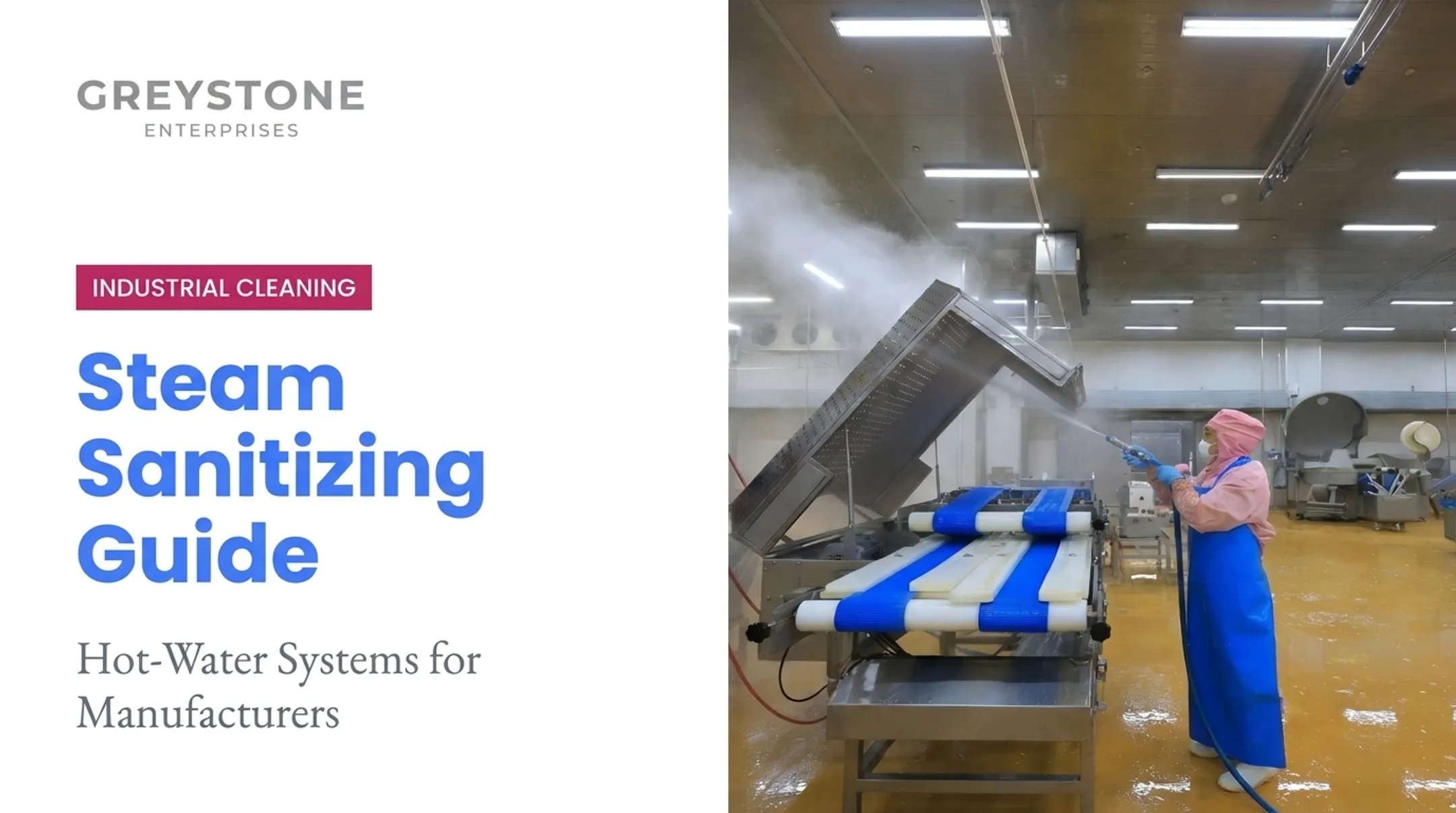
- Hose or lance delivers steam to the work area
- Nozzle applies steam at the surface

Operators balance heat, pressure, distance, dwell time, flow, and movement speed. Too much dwell on a delicate surface causes damage. Too little leaves soil behind.
Manufacturer specs vary widely and are model-specific. One industrial unit lists 290°F maximum outlet temperature and 5% moisture, while another lists 365°F and 97% dry vapor. Neither is a general range, so ask for the spec sheet of the exact unit.
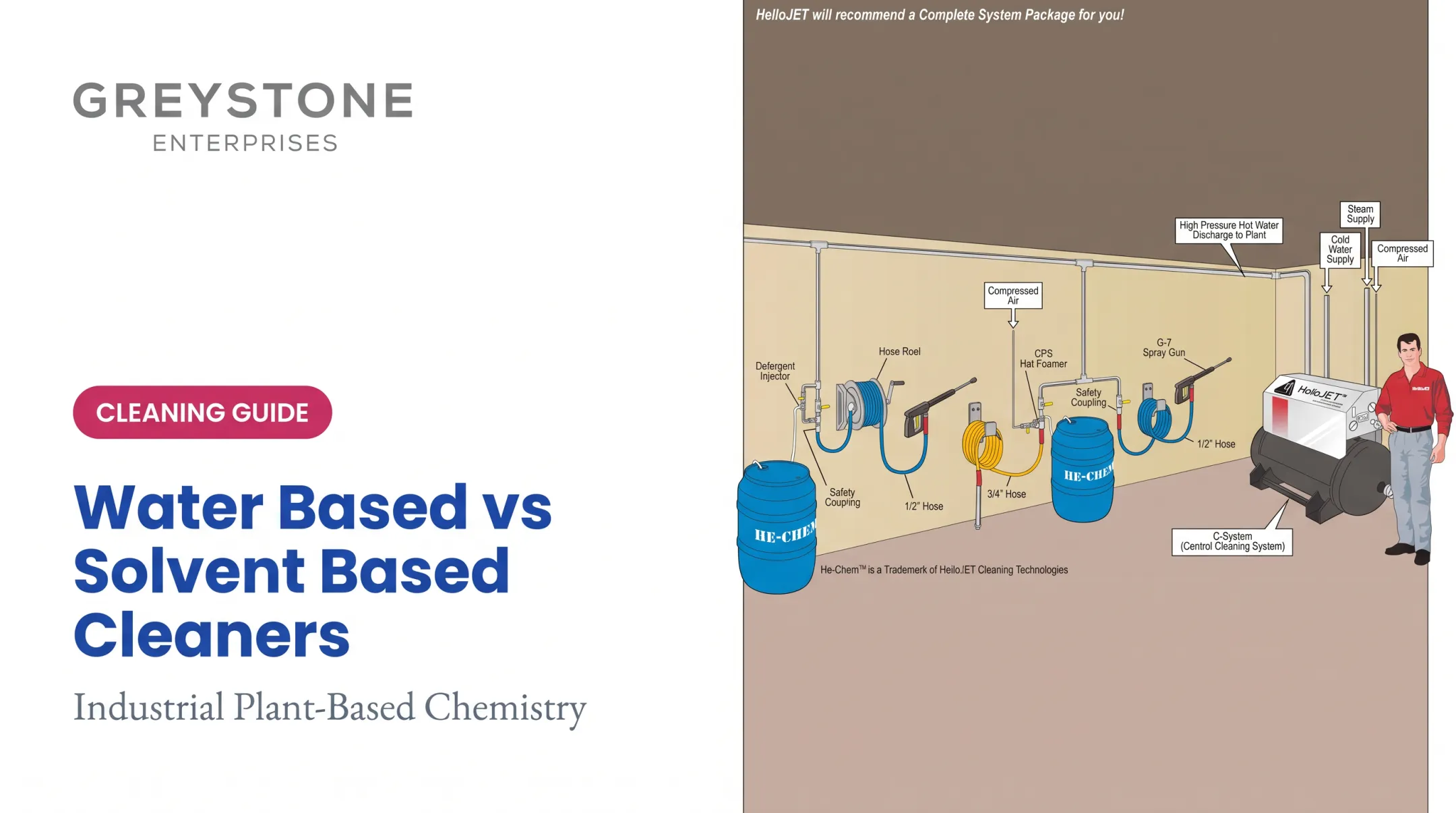
Greystone's HelioJET steam gun stations deliver pure, high-pressure steam for dry cleaning without added water. A station includes a coiled high-pressure hose, trigger handle, and long spray wand.
Why Low Moisture Matters
"Dry" does not mean water-free. Steam systems still use water to make vapor. The practical gains are:
- Less standing water on floors and equipment
- Less rewetting of cleaned surfaces
- Shorter drying time between steps
- Less moisture migration into sensitive areas
Cleaning and sanitation are separate mechanisms. Cleaning is physical: heat softens grease and loosens deposits. Sanitation targets microorganisms. Soil removal, coverage, contact time, and post-cleaning verification still matter either way.
Benefits and Industrial Applications
Operational and Sustainability Benefits
A well-designed dry-steam process may cut water use, chemical reliance, wastewater, drying requirements, and interruptions. Independently verified facility-level savings figures are hard to find. One manufacturer describes dry steam as less water-intensive without quantifying it. Measure your own baseline.
Greystone's sustainability focus is on saving water, reducing energy needs, and improving efficiency. A fair environmental comparison also counts heating energy, ventilation, wastewater handling, and equipment lifecycle.
Low-Moisture Food and Beverage Environments
Plants handling powders, spices, nuts, snacks, bakery items, and confections often avoid water. FDA's January 2025 draft low-moisture guidance recommends dry cleaning as far as practical and controlled wet cleaning where needed. Where water is introduced, it advises minimizing it and drying completely as soon as possible. It is draft guidance, not a final rule.
Dry steam can complement scraping, vacuuming, brushing, chemistry, and environmental monitoring. It does not automatically replace them or a validated sanitation program.
Process Equipment, Tanks, Vessels, and Mixers
Dry steam is worth evaluating for accessible surfaces between runs:
- Transfer points and tools
- Exterior vessel surfaces
- Areas around tanks and mixers
Limits apply. Enclosed interiors, complex geometries, shadowed areas, valves, seals, and instrumentation may need circulation, rinsing, or a different CIP method. Greystone's HelioJET interior tank-washing systems, paired with matched chemistries, address interiors.
Other Industrial Use Cases
Paper-mill equipment, production-line components, maintenance areas, heavy equipment, and fleet wash bays are possible fits. Each substrate and soil needs testing.
Dry steam likely suits moisture-sensitive areas and light-to-moderate grease. Hot high-pressure water, chemistry, mechanical action, or a combined process often wins on heavy caked-on soils, which is why fleet bays commonly use hot high-pressure stations.
Cleaning, Sanitation, and Compliance Outcomes
Terms matter. EPA distinguishes cleaning (removing dirt and organic matter), sanitizing (reducing bacteria), and disinfecting (killing viruses and bacteria). Steam does not guarantee compliance with any of them.
Laboratory results show promise but are not plant validation. In a 2019 coupon study, superheated steam at 150°C brought S. aureus biofilm counts below detection on plastics in 15 seconds. That is controlled lab work.

Collect evidence:
- Pre- and post-cleaning inspection
- ATP or microbiological testing (ATP is not organism-specific)
- Temperature and exposure records
- Chemical-residue checks
- Documented SOPs
Dry Superheated Steam Compared With Other Cleaning Methods
Versus Conventional Steam or Hot Water
| Method | Main driver | Fits best |
|---|---|---|
| Superheated steam | Thermal energy, low moisture | Moisture-sensitive areas |
| Saturated steam | Heat plus condensate | General heat tasks |
| Hot water | Heat and flow | Water-soluble, heavy soils |
| High-pressure wash | Volume and force | Robust surfaces, embedded soils |
Fats and oils need heat above their melting point, per UF/IFAS guidance. Hot water or conventional steam may serve heavy, water-soluble soils better.
Versus High-Pressure Cleaning
High-pressure cleaning relies on water volume and force. Dry steam relies on thermal energy and controlled application. FDA allergen guidance cautions that high-pressure hoses can spread or aerosolize allergenic material and reach nearby food-contact surfaces.
Trade-offs to weigh include:
- Grease removal and biological soils
- Abrasion, splash, and wastewater volume
- Operator exposure and drying time
Independent side-by-side industrial trials are scarce, so rely on manufacturer documentation and your own facility testing.
Versus Chemical-Assisted Cleaning
Dry steam can reduce detergent use in some tasks. It may not replace chemistry for oils, proteins, mineral scale, or biofilms. Alkaline detergents handle proteins and difficult fats, and acids handle scale.
Tri-Solve plant-based chemistries can be evaluated as part of a customized strategy. Suitability still depends on the soil, surface, and any food-contact use.
Choosing by Facility Conditions
Weigh these factors:
- Soil type and surface material
- Moisture tolerance
- Required hygiene outcome
- Equipment access
- Production schedule
- Wastewater controls and energy availability
- Worker exposure and validation needs
Then run a controlled trial on representative surfaces. Record cleaning time, resource use, visible results, verification data, material compatibility, and operator feedback.
Limitations and Cautions
Review these before use:
- Heat-sensitive plastics, coatings, adhesives, and seals
- Electronics, insulation, and fragile materials
- Confined or poorly ventilated spaces
One manufacturer manual warns against steam on damageable items, prolonged application to susceptible surfaces, and electrical items. No universal temperature or time limits exist for these materials.
Heavy deposits, concealed contamination, inaccessible interiors, and some biofilms may need pre-cleaning, mechanical action, chemistry, rinsing, or another validated process.
How to Evaluate and Implement a Dry Steam Cleaning Program
Facility and Equipment Assessment
Map the conditions that shape your cleaning program:
- Soils, surfaces, and food-contact zones
- Production constraints, utilities, drainage, and ventilation
- Access points and spots where condensation or heat creates risk
Ask suppliers:
- How are temperature and pressure controlled?
- What are the flow rates, attachments, and hose reach?
- What are the energy requirements?
- What maintenance and calibration are needed?
- What operator training is provided?
- Does it fit your sanitation procedures?
Utilities matter too. HelioJET units, for example, will not start while condensation remains in the steam supply line, and supply piping should be insulated with a steam trap at the low point.
Safety and Operating Controls
Common hazards include:
- Burns, pressure, and poor visibility
- Aerosols, slips, and electrical contact
- Hose or lance handling risks
Review applicable OSHA requirements, including PPE rules, lockout/tagout, and confined-space provisions. A tank is not automatically a permit-required space, so check the criteria.
Also follow facility EHS procedures, equipment manuals, and food-safety requirements. A generic checklist is not enough.
Validation and Greystone's Customized Approach
Set measurable acceptance criteria before a pilot:
- Cleaning effectiveness and sanitation performance
- Material compatibility and resource use
- Downtime and worker safety
FDA's 1993 cleaning-validation guide is written for pharmaceuticals, but its principle still applies: limits should be practical, verifiable, and scientifically justified.
Greystone can help assess a facility-specific cleaning challenge and determine whether HelioJET's patented high-pressure hot-water and steam technology, with Tri-Solve plant-based chemistry where appropriate, fits. The recommendation depends on the site and application.

Conclusion: Is Dry Superheated Steam Cleaning Right for Your Facility?
Dry superheated steam is a useful low-moisture tool for selected soils, surfaces, and environments. Success depends on controlled application, sufficient coverage, validated performance, and sound safety practice.
Next, compare current water, chemical, labor, downtime, wastewater, and verification needs against a documented trial. Choose on evidence, not on temperature or sustainability claims.
Frequently Asked Questions
What is the difference between steam and superheated steam?
Saturated steam is at the boiling point for its pressure. Superheated steam is heated beyond that point at the same pressure. Behavior depends on operating conditions.
How does dry superheated steam cleaning work?
A generator heats water and delivers low-moisture steam through a hose and nozzle to soften or detach soils. Pressure, temperature, dwell time, and technique all affect results.
Is dry superheated steam cleaning safe for food processing equipment?
It depends on equipment material, food-contact status, thermal tolerance, sanitation procedure, and validation. Follow applicable food-safety requirements and manufacturer guidance.
What can dry superheated steam cleaning remove?
It may work on selected grease, oils, biological residues, and surface deposits. Heavy buildup, mineral scale, biofilms, or inaccessible contamination may need chemistry or mechanical action.
Does dry steam cleaning use water or chemicals?
Steam systems use water to make vapor. They may reduce, but not universally eliminate, cleaning chemicals, depending on the soil and desired outcome.
When should a facility choose dry steam over pressure washing?
Consider moisture sensitivity, soil type, surface durability, wastewater controls, sanitation requirements, and available validation evidence. Dry steam suits low-moisture needs, while pressure washing suits heavy, robust-surface soils.