
Introduction
Process cleaning is a controlled sequence for removing product residues, soils, contaminants, or deposits from industrial equipment and process areas. It is not washing until something looks clean.
For US food and beverage, pharmaceutical, chemical, paper, energy, and manufacturing plants, the stakes are real. Cleaning affects safety, product quality, compliance, uptime, and equipment reliability.
FDA warning letters in 2025 cited Maui Seafood after worn, grooved cutting boards carrying filth tested positive for L. monocytogenes.
This article walks through a six-stage framework. Treat it as a starting point. Your soil, equipment, chemistry, environment, and approved SOPs decide the final method.
Key Takeaways
- Process cleaning is a controlled operation with documented steps, not a surface wipe-down.
- The six stages: prepare, remove gross soil, pre-rinse, clean with chemistry and action, post-rinse and inspect, then sanitize or release.
- Time, temperature, concentration, mechanical action, and water quality all shape results.
- Cleaning, sanitizing, disinfecting, and CIP are related but not interchangeable.
- Verification beats appearance every time.
What Is Process Cleaning and Why Is It Used in Industrial Facilities?
Process cleaning is the planned removal of material that builds up during production, storage, transfer, maintenance, or handling. That includes product residues, oils, proteins, minerals, scale, and dust. The goal is practical: return equipment or an area to a condition fit for the next run, inspection, repair, or safe operation.
Cleaning, Sanitizing, Disinfecting, and CIP
- Cleaning removes soil and residue. It does not automatically sanitize.
- Sanitizing reduces microorganisms on a surface that has already been cleaned. Under 21 CFR Part 117, it applies to cleaned surfaces.
- Disinfecting generally involves a different product, claim, and level of microbial control.
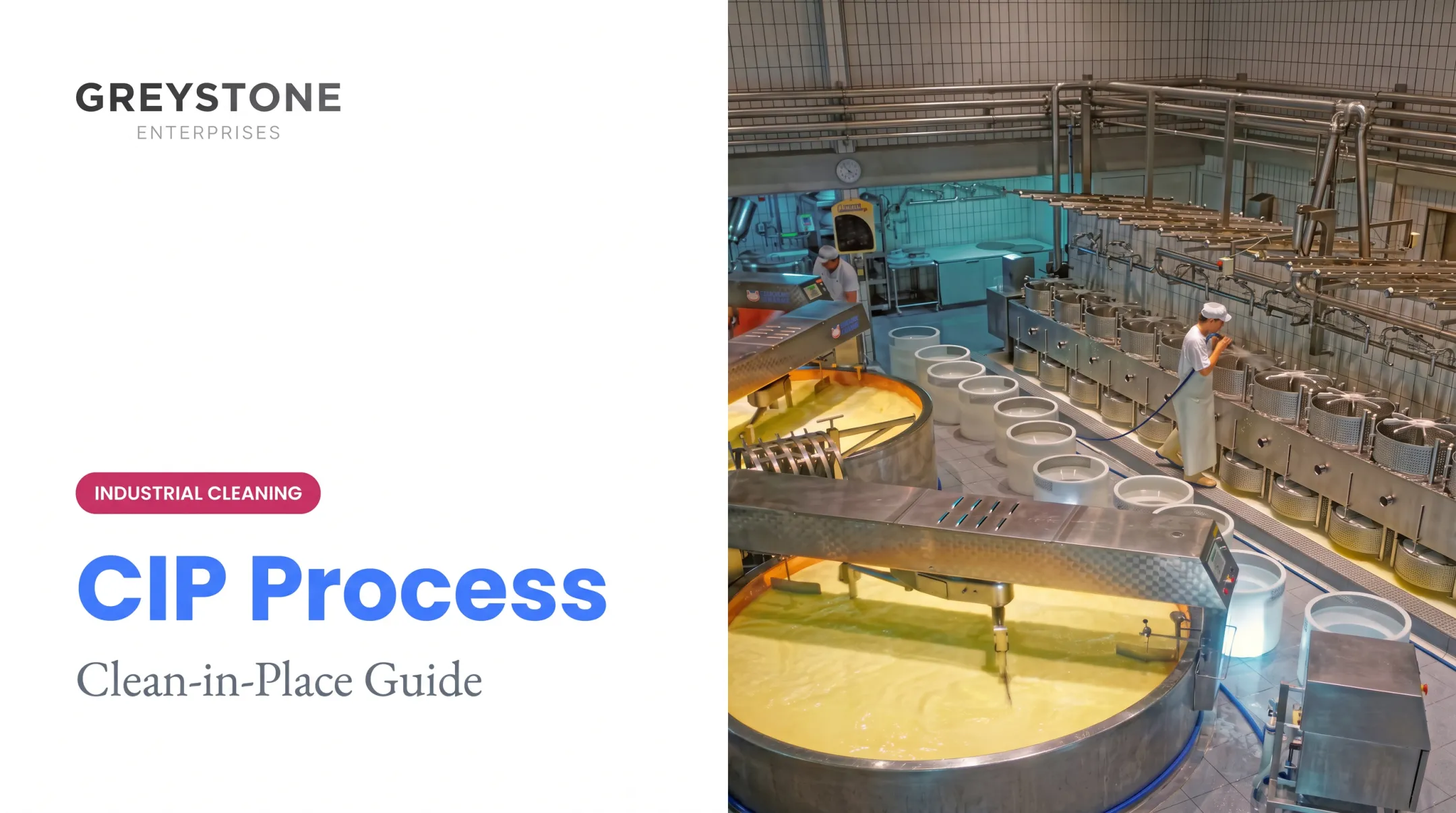
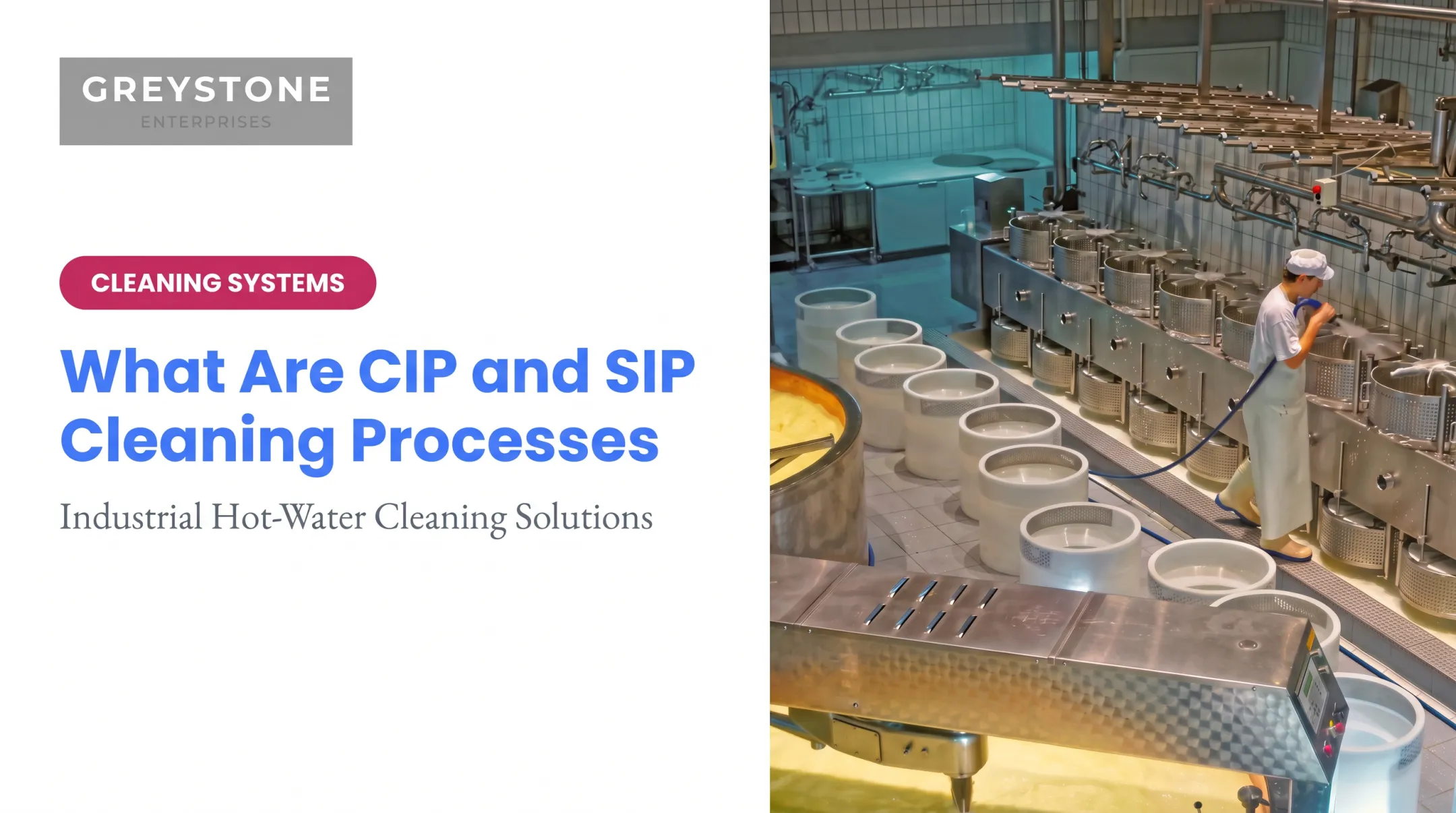
- Clean-in-place (CIP) cleans internal surfaces in place by circulating, spraying, or flowing solutions, per 3-A definitions. It is one delivery method, not a synonym for process cleaning.
- Clean-out-of-place (COP) covers equipment that is partly or fully disassembled.
Why Structure Beats Informal Washing
A defined procedure gives you repeatability and lowers cross-contamination risk. It protects equipment, speeds changeovers, cuts unplanned downtime, and leaves evidence that steps were followed.
Pharmaceutical rules make this explicit. 21 CFR 211.67 requires written cleaning procedures that cover:
- Responsibilities and schedules
- Methods, disassembly, and reassembly
- Protection of clean equipment
- Inspection immediately before use
Requirements differ by industry, product, and equipment, so confirm what applies to you.
The Six Stages of Process Cleaning
Work these stages in sequence. Confirm products, temperatures, contact times, and verification methods against your SOPs, equipment manuals, chemical labels, and applicable requirements.

Stage 1: Plan, Isolate, and Prepare
Lock out energy, clear product, and match the method to the soil and equipment before water or chemistry hits the line.
- Identify the equipment or area and stop or isolate the process.
- Remove product where appropriate.
- Review soil and material hazards, then select the method.
- Confirm worker protection and wastewater controls.
- Check that the equipment tolerates water, chemicals, pressure, heat, steam, or tools.
OSHA's lockout/tagout rule (29 CFR 1910.147) treats cleaning and unjamming as servicing when workers could face unexpected startup or released energy. Production status doesn't exempt cleaning. FDA also expects equipment to be taken apart as far as needed for thorough cleaning.
Stage 2: Remove Gross or Dry Soil
Remove loose product, solids, dust, scraps, and heavy deposits before adding water or detergent. Otherwise you push soil into seams, drains, nearby equipment, and wastewater.
Suitable approaches include scraping, brushing, vacuuming, controlled collection, and low-moisture methods. Dry-process plants may need to avoid water altogether.
FDA's January 2025 draft guidance for low-moisture ready-to-eat foods recommends dry cleaning where practical, with limited, controlled wet cleaning and prompt drying. The same draft notes FDA is unaware of evidence that dry cleaning alone remediates a pathogen event without sanitizing.
Stage 3: Pre-Rinse or Initial Soil Loosening
An initial rinse removes remaining loose material and prepares the surface for chemistry. Avoid practices that aerosolize contaminants or drive soil into gaskets, cracks, bearings, and hard-to-reach spaces.
USDA's dairy rule calls for a pre-rinse at roughly 110-115°F, but that figure is dairy-specific. Oklahoma State notes that temperature depends on process requirements and chemical activity, and that spray devices need adequate circulation pressure.
Water contacting food-contact surfaces must also be of adequate sanitary quality under 21 CFR 117.37.
Stage 4: Apply Cleaning Chemistry and Mechanical Action
The selected detergent, solvent, degreaser, acid, alkaline cleaner, enzyme, or steam works with mechanical action to detach and dissolve soil.
Control these variables:
- Chemical identity, concentration, and pH
- Temperature and contact time
- Coverage, agitation, flow, and pressure
- Condition of brushes, spray devices, and hoses
The product label, safety data sheet, and site SOP set dilution, compatibility, PPE, ventilation, and rinse requirements. OSHA's SDS guidance points to Section 7 for handling, Section 8 for exposure controls, and Section 6 for cleanup.
Stage 5: Post-Rinse, Inspect, and Correct
The post-rinse removes loosened soil and chemical residue. Then inspect valves, seals, welds, dead legs, spray devices, drains, tank interiors, and joints.
Any remaining residue means targeted recleaning before sanitizing or release. A visually clean surface is not automatically microbiologically clean or residue-free.
Verification options vary by application:
- Visual inspection, which 3-A recommends after every wash method
- ATP and general-protein swabs as first-pass checks
- Allergen-specific swabs, typically taken before sanitizing
- Rinse-water sampling, which can miss insoluble or occluded residues
- Conductivity, which FDA's inspection guide says may suit routine monitoring after validation
Match the check to the soil, surface, and release criteria for that line.
Stage 6: Sanitize, Finalize, and Release for Service
Sanitize, disinfect, dry, or apply corrosion protection only where the application calls for it. FDA describes cleaning and sanitizing as sequential, because leftover substances can interfere with sanitizers. Use approved products according to their labels and your procedures.
Before release, confirm:
- Final rinse, drainage, and drying are complete
- Reassembly and line clearance are done
- Equipment is protected from recontamination
Records should capture the equipment cleaned, date, responsible personnel, chemicals and concentrations, operating conditions, inspection findings, verification results, deviations, and corrective actions.
In pharmaceutical plants, 21 CFR 211.182 requires equipment logs with date, time, product, and batch lot number, signed by those who clean and double-check.
Where Process Cleaning Is Applied and What Affects Results
Common Applications and Timing
Typical targets include:
- Tanks, vessels, mixers, and piping
- Conveyors, fillers, and heat exchangers
- Floors, wash bays, and production rooms
- Paper-making fabrics and fleet-maintenance areas
Cleaning happens:
- Between batches and during planned sanitation
- After spills or deviations
- Before maintenance and during shutdowns
- On recurring or condition-based schedules
Matching the Method
- Manual cleaning: flexible, but labor-heavy and operator-dependent.
- COP: suits removable parts; still needs post-wash inspection.
- CIP: avoids disassembly, but equipment must be designed for it.
- Foam or low-pressure: extends contact time on vertical and complex surfaces.
- High-pressure hot water or steam: cuts through grease and baked-on soil.
- Dry cleaning: fits moisture-sensitive environments.
Match each to access, soil, material compatibility, and worker safety. For tanks, OSHA's confined-space rules may apply.
A Greystone Example
Greystone pairs HelioJET high-pressure hot-water and steam technology with Tri-Solve plant-based chemistries. In one paper mill dryer-fabric program, the wash sequence is:
- Run a water-only rinse
- Apply a neutral degreaser at 10% with the HelioJET off
- Allow a soak
- Rinse with HelioJET showers
- Purge the system
The mill's case study reported a 22-minute cycle, 37% less cleaning time, and 75% lower chemical use compared with its earlier two-to-three-hour manual process.

Those results belong to that mill's soils, fabrics, and procedures. The right combination for your plant depends on your own surfaces, process, and validated procedures.
Variables That Shape Results
Results depend on several factors:
- Time, mechanical action, concentration, temperature, and water quality
- Operator capability, equipment condition, and throughput
- Cleaning frequency and wastewater handling
On wastewater, EPA pretreatment rules apply to industrial discharges to publicly owned treatment works. Federal rules prohibit discharges below pH 5.0 unless the works is designed to accommodate them, and local limits may add more.
Common Issues, Misconceptions, and When Process Cleaning May Not Be Appropriate
Misconceptions
- "Visually clean means safe." It doesn't. Verification tests exist for a reason.
- "Stronger chemistry cleans better." Wrong chemistry or concentration can damage equipment and fail to remove the soil.
- "Sanitizer replaces detergent." FDA notes residual soil interferes with sanitizers.
- "Pressure removes everything." Some soils need chemistry, heat, or dwell time.
Execution Failures
Common failures include:
- Skipping gross-soil removal
- Picking the wrong chemical or mis-diluting
- Shortening contact time
- Missing hidden surfaces
- Reusing contaminated tools
- Neglecting isolation
- Releasing equipment unverified
Persistent problems carry consequences. In its November 2025 warning letter to The Father's Table, FDA cited positive environmental samples from a conveyor belt, table, drains, and floor holes, and said they demonstrated inadequate sanitation control.
Investigating Poor Results
Review these factors before changing the process:
- Soil identification
- Chemistry, temperature, and time
- Mechanical action and equipment access
- Operator training
- Verification data
Don't reflexively raise chemical strength or pressure.
When to Modify the Approach
The six-stage method needs adjusting, or another method fits better, for:
- Moisture-sensitive processing
- Confined or inaccessible spaces
- Fragile surfaces or incompatible materials
- Severe contamination or hazardous residues
- Internal equipment needing validated CIP or specialist cleaning
Choose the method through a documented risk assessment covering worker safety, product protection, environmental controls, equipment integrity, downtime, and applicable US requirements.

Conclusion
Process cleaning prepares equipment, removes soil, applies the right mix of chemistry and mechanical action, rinses and inspects, and finishes with the right final treatment and release checks.
Knowing why each stage exists helps teams avoid ineffective cleaning, protect workers and equipment, and choose sensibly among CIP, manual, dry, steam, or high-pressure methods. Apply the framework to your facility's soils, equipment, and procedures, and verify results rather than following a generic checklist.
Frequently Asked Questions
What are the six stages of process cleaning?
Prepare and isolate, remove gross soil, pre-rinse, apply chemistry and mechanical action, post-rinse and inspect, then sanitize or release. Confirm the sequence against your SOP, equipment requirements, chemical label, and regulations.
What is a cleaning procedure?
A documented sequence identifying the area or equipment, method, chemicals, operating conditions, safety controls, verification steps, and release requirements.
What is the correct sequence for using disinfectants effectively?
Remove soil and rinse first, then apply the disinfectant with full coverage for the required contact time. Follow the product label and site procedure.
What is the definition of a CIP system?
CIP circulates or applies cleaning solutions through internal equipment surfaces without dismantling the equipment. It must be designed and validated for the specific system.
How is process cleaning different from sanitizing?
Cleaning removes physical or chemical soil. Sanitizing is a separate microbial-control step performed after suitable cleaning when the application requires it.
How do you verify that process cleaning was effective?
Start with visual inspection, then add site-appropriate checks such as rinse sampling, pH, conductivity, ATP, allergen, or microbial testing. No single method applies everywhere.